Core service · Georgia
Crawl Space Vapor Barrier Installation in Georgia
Bare soil under a house gives off moisture continuously. A properly installed vapor barrier — reinforced, full-coverage, sealed at the seams — is the single most cost-effective step toward a dry crawl space, and the foundation of any encapsulation.
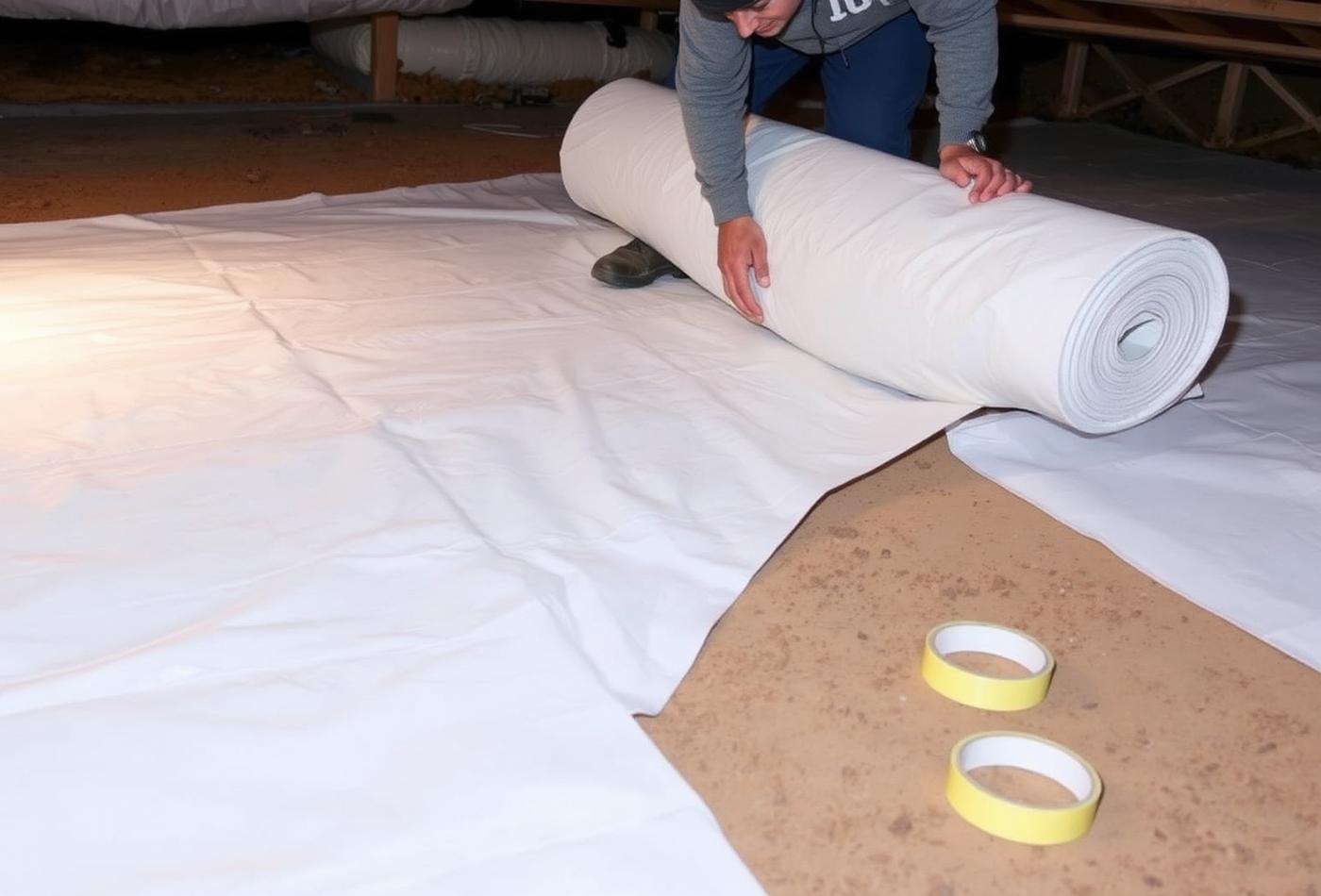
The purpose
What a moisture barrier actually does
Soil holds water and releases it upward as vapor, day and night, whether the surface looks dry or not. In a Georgia crawl space that vapor condenses on cooler framing and duct surfaces. The barrier's job is to separate the soil from the air in the crawl space, so that moisture never enters the space to begin with.
The reason cheap plastic fails isn't the concept — it's the execution. Sheeting laid loosely over 70% of the floor, torn at the piers, with untaped overlaps, leaves most of the soil in direct contact with crawl space air. Full coverage and sealed seams are what make the difference between a barrier and a tarp.
Specification
What we install and why
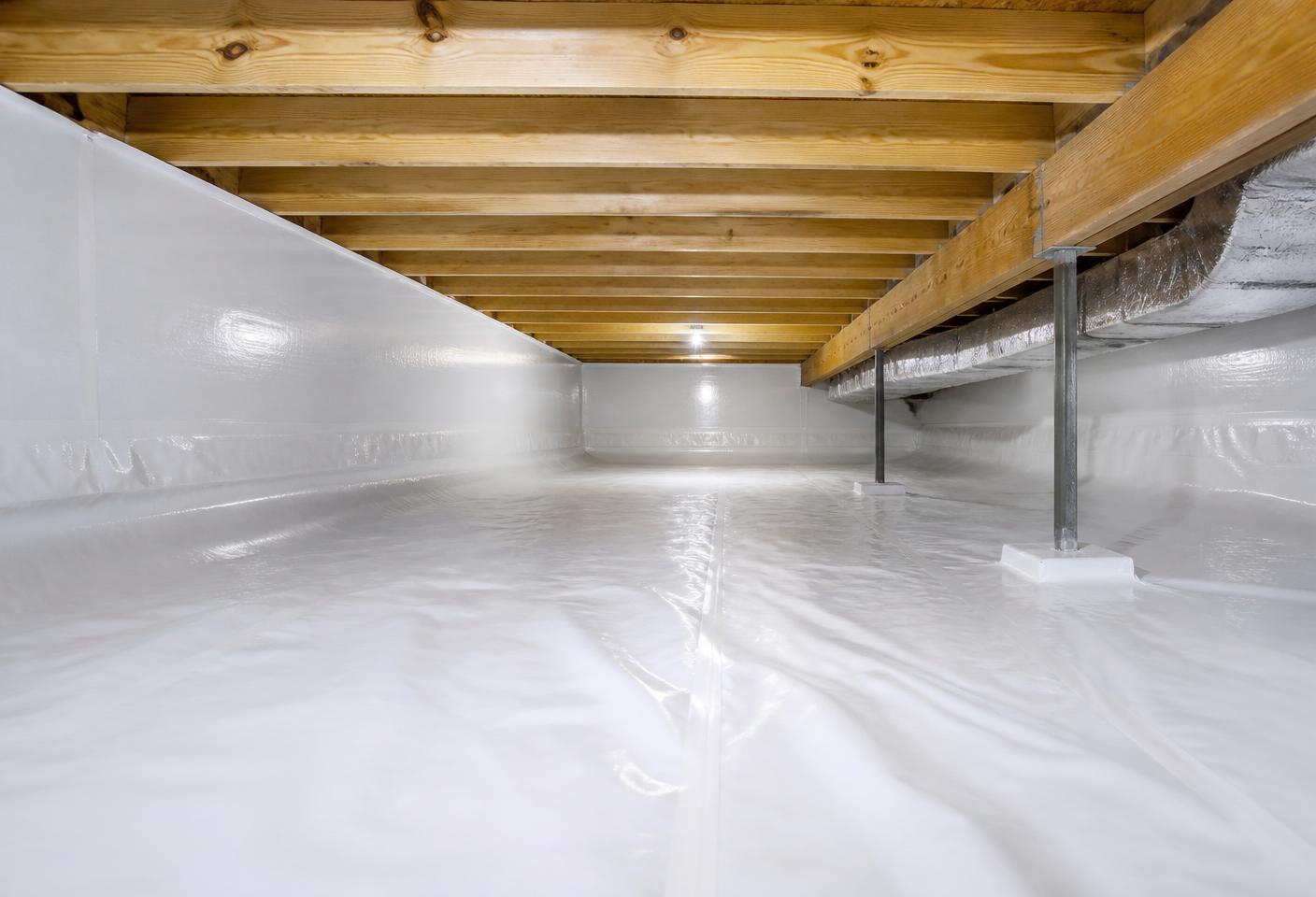
The material and the detailing both get specified in writing, so you know what's going under your house.
- Reinforced liner: string-reinforced polyethylene that resists puncture and tearing during future service work
- Full-floor coverage: soil covered edge to edge, not just the open middle
- Sealed seams: generous overlaps and seam tape rated for the material
- Pier and column detail: barrier wrapped and sealed at each support instead of cut around
- Wall termination: liner run up the foundation wall and fastened where the scope calls for it
- Penetration detail: plumbing, conduit and duct drops sealed
Installation
How the install goes
- 01Prep the floorOld plastic, construction debris, sharp rock and organic material removed so the new liner sits flat and stays intact.
- 02Confirm the ground is dry enoughIf liquid water is present, drainage is scheduled first. A barrier over standing water hides the problem instead of solving it.
- 03Lay and lapRolls placed with consistent overlaps, worked around piers and ductwork, trimmed at the perimeter.
- 04Seal and fastenSeams taped, piers wrapped, and wall runs terminated and fastened as specified.
- 05Check the resultWalk the space, confirm coverage, and re-measure humidity so you have a baseline going forward.
- 06Advise on next stepsIf readings suggest the space needs a sealed envelope or dehumidification, we say so — and if it doesn't, we say that too.
Old plastic torn up under your house?
A barrier replacement is often a one-day job. Get it measured and quoted before it turns into a bigger moisture problem.
Limits
When a vapor barrier is not enough
A barrier controls soil vapor. It does nothing about air coming through open foundation vents, and nothing about liquid water. If your crawl space humidity stays high through the summer with a good barrier in place, the remaining moisture is arriving as humid outdoor air and the fix is sealing the envelope plus dehumidification.
If water pools after storms, the barrier is the last step, not the first — drainage and waterproofing come first, then encapsulation.
- Barrier alone: damp soil, no standing water, vents can be sealed later
- Barrier plus sealed envelope: high summer humidity, condensation on ducts
- Drainage first: puddles or seepage after rain
- Repairs first: soft wood or failed supports found during inspection
Material and detailing specification is one of the biggest cost variables — the Georgia encapsulation cost guide explains why two quotes can differ so much. Homeowners around Macon most often start here after finding torn builder plastic.
Homeowner questions
Vapor barrier questions
How thick should a crawl space vapor barrier be?
Thin 6-mil sheeting meets a minimum but tears easily and rarely survives normal traffic. For Georgia crawl spaces we use reinforced liner in the 10–20 mil range, choosing heavier material where crews, plumbers or HVAC techs will be working on it.
Is a vapor barrier the same as encapsulation?
No. A vapor barrier covers the ground. Encapsulation extends that barrier up the foundation walls, seals the vents and access, and adds humidity control. A barrier alone reduces ground moisture but leaves outdoor humidity coming through the vents.
Can a vapor barrier be installed over wet soil?
If the soil is damp from vapor, yes. If liquid water pools there after rain, drainage comes first — otherwise water sits on top of or beneath the liner and the crawl space stays wet.
Do the seams need to be taped?
Yes. Loose overlapping sheets let vapor pass at every joint and shift out of place. Seams are lapped and sealed, and the barrier is detailed around piers, columns and penetrations.
Free estimate request
Get a Vapor Barrier Quote
Tell us the approximate square footage and what the current barrier looks like — or send photos with your request.
Related pages
- Crawl space encapsulationThe full sealed system
- High humidity crawl spaceIf humidity stays high
- Crawl space dehumidifierControlling the air
- Crawl space drainageWhen water pools first
- Atlanta, GAMetro Atlanta crawl spaces
- Cost guideBarrier thickness and price