Core service · Georgia
Crawl Space Dehumidifier Installation in Georgia
In a Georgia summer, sealing a crawl space gets you most of the way. Dehumidification is what holds the last part — keeping relative humidity in a stable range so wood, ductwork and stored materials stay dry through the worst months.
When it's needed
Does your crawl space actually need a dehumidifier?
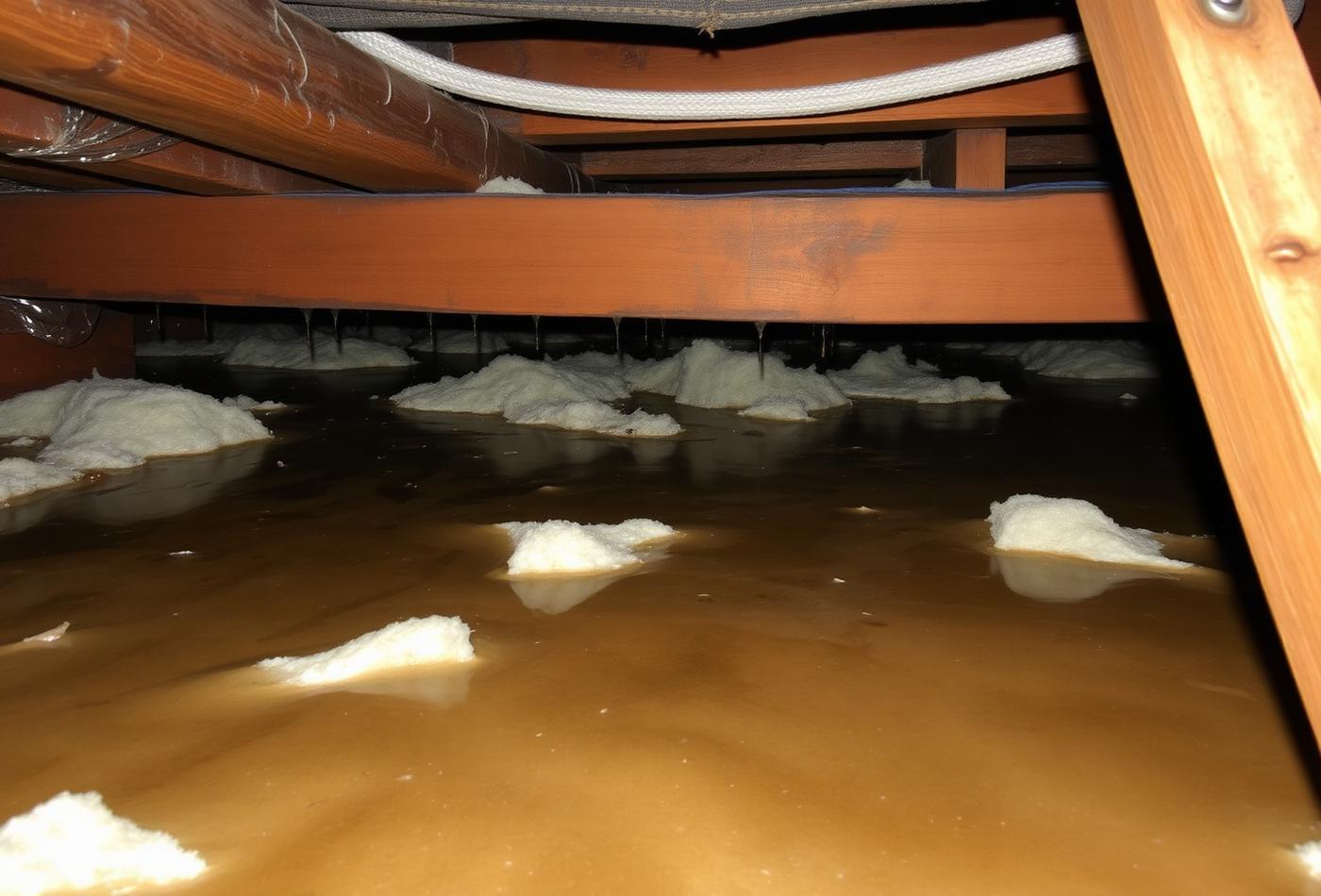
Not every crawl space does, and we would rather leave one out than sell it. The honest test is measurement: with the ground covered and the envelope sealed, does relative humidity hold below roughly 60% during humid weather? If it does, no unit is needed. If it climbs into the 70s and 80s, the space is either still leaking outdoor air or genuinely needs mechanical dehumidification.
A dehumidifier in an open, vented crawl space is a different story: it runs against the outdoors and never catches up. Sealing comes first — see encapsulation — then the unit gets sized for a closed volume.
- Condensation beading on duct wrap or cold water lines
- Relative humidity above 65–70% in summer readings
- Wood moisture content trending above roughly 18–20%
- Musty odor entering the house through floor cavities
- Surface growth appearing on joists after a wet season
- Stored items under the house staying damp
Sizing
How units get sized and placed
Sizing considers the square footage and clearance height of the sealed space, how much moisture load remains after the barrier is installed, and how easily air can circulate between bays and around piers.
- Capacity: rated pints per day matched to the volume and the local summer load
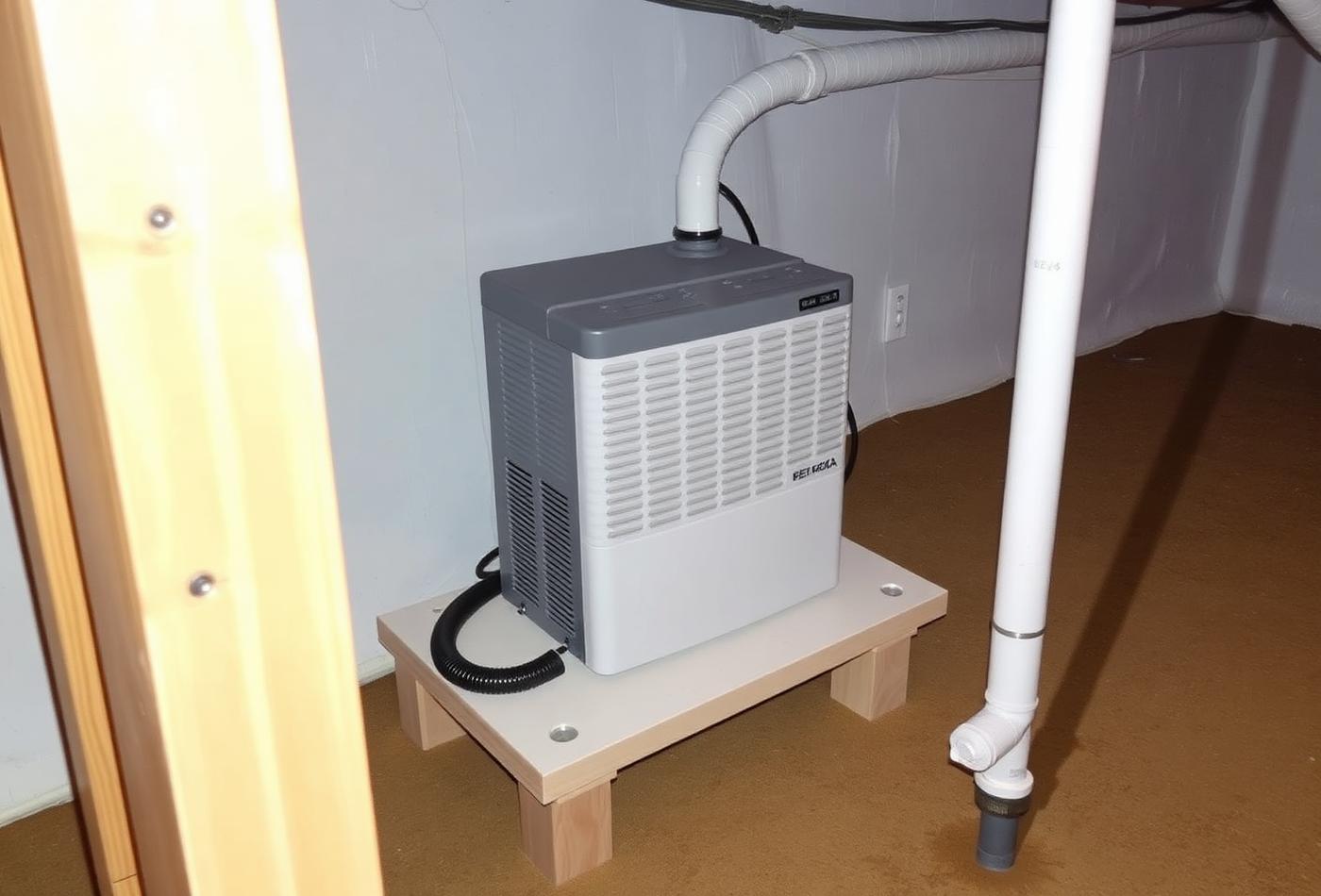
- Placement: mounted on a platform or hung, kept off the liner and clear of access paths
- Air distribution: short duct runs where the crawl space is compartmentalized by girders or walls
- Condensate route: gravity drain to daylight where grade allows, otherwise a condensate pump to a suitable discharge
- Control: humidistat set to a target and verified before we leave
- Power: a dedicated circuit where the existing supply isn't appropriate
Installation
Commissioning, not just plugging in
- 01Baseline readingsHumidity and wood moisture measured before anything is installed, so the improvement can be verified afterwards.
- 02Envelope checkVents, access door and rim gaps confirmed sealed, because leaks make sizing meaningless.
- 03Mount and levelUnit set on a platform above the liner so a puncture or condensate spill can't sit on the barrier.
- 04Drain the condensateLine routed and sloped to daylight, or a pump installed and tested with water.
- 05Set the targetHumidistat set for a stable range and left running long enough to confirm it pulls the space down.
- 06Hand overYou get the target setting, what normal looks like, and what to check seasonally.
Compare your crawl space options
Barrier only, sealed envelope, or sealed envelope plus dehumidification — an inspection with real readings tells you which one your house needs.
Georgia context
Why dehumidification matters more in the South
Georgia's humid season is long. Coastal areas near Savannah hold high dew points for months, and even inland around Macon and Columbus summer nights stay muggy enough that a crawl space never gets a chance to dry out on its own. Homes with ductwork in the crawl space feel it first, because cold supply lines become condensation surfaces.
That's why sealed crawl spaces here are usually specified with humidity control rather than treated as optional, while a dry, well-drained crawl space in a mild season may hold range without one.
Humidity control is usually quoted alongside sealing work — see the encapsulation cost guide for planning ranges, or high humidity in the crawl space if you want to understand the problem before pricing the fix.
Homeowner questions
Dehumidifier questions
What humidity level should a crawl space hold?
A sealed crawl space is generally targeted in the 50–60% relative humidity range. That's dry enough to keep wood well below the moisture content where problems develop, without over-drying framing.
Can I just use a household dehumidifier?
Consumer units are built for conditioned rooms and rarely handle crawl space temperatures, dust and continuous duty. They also need manual draining. A crawl space unit is designed for the environment and plumbed to drain on its own.
Does a dehumidifier replace a vapor barrier?
No. Running a dehumidifier over bare soil means it dehumidifies the ground continuously and never wins. The barrier stops the moisture supply; the dehumidifier manages what's left.
How much electricity does it use?
Modern units cycle rather than run continuously and draw a few hundred watts while running. In a properly sealed crawl space the run time drops substantially compared with a vented space, because there is no constant resupply of humid air.
Does it need maintenance?
Filter checks and confirming the condensate line stays clear. We set the target humidity at commissioning and show you what a normal reading looks like.
Free estimate request
Get a Dehumidifier & Moisture Control Quote
Tell us what your crawl space looks like now — vented or sealed, barrier or bare soil — and we'll measure before recommending equipment.
Related pages
- High humidity crawl spaceSymptoms and causes
- EncapsulationSealing comes first
- Vapor barrier installationStopping soil moisture
- Musty smell from crawl spaceOdor and humidity
- Crawl space insulationAfter the space is dry
- Cost guideEquipment and pricing