Core service · Georgia
Crawl Space Drainage Systems in Georgia
When water gets under a house, drainage decides whether it leaves. Perimeter drains, a sump where gravity can't do the work, and honest corrections outside — gutters, downspouts, grade — are what keep a crawl space dry between storms.
Sources
Where the water is coming from
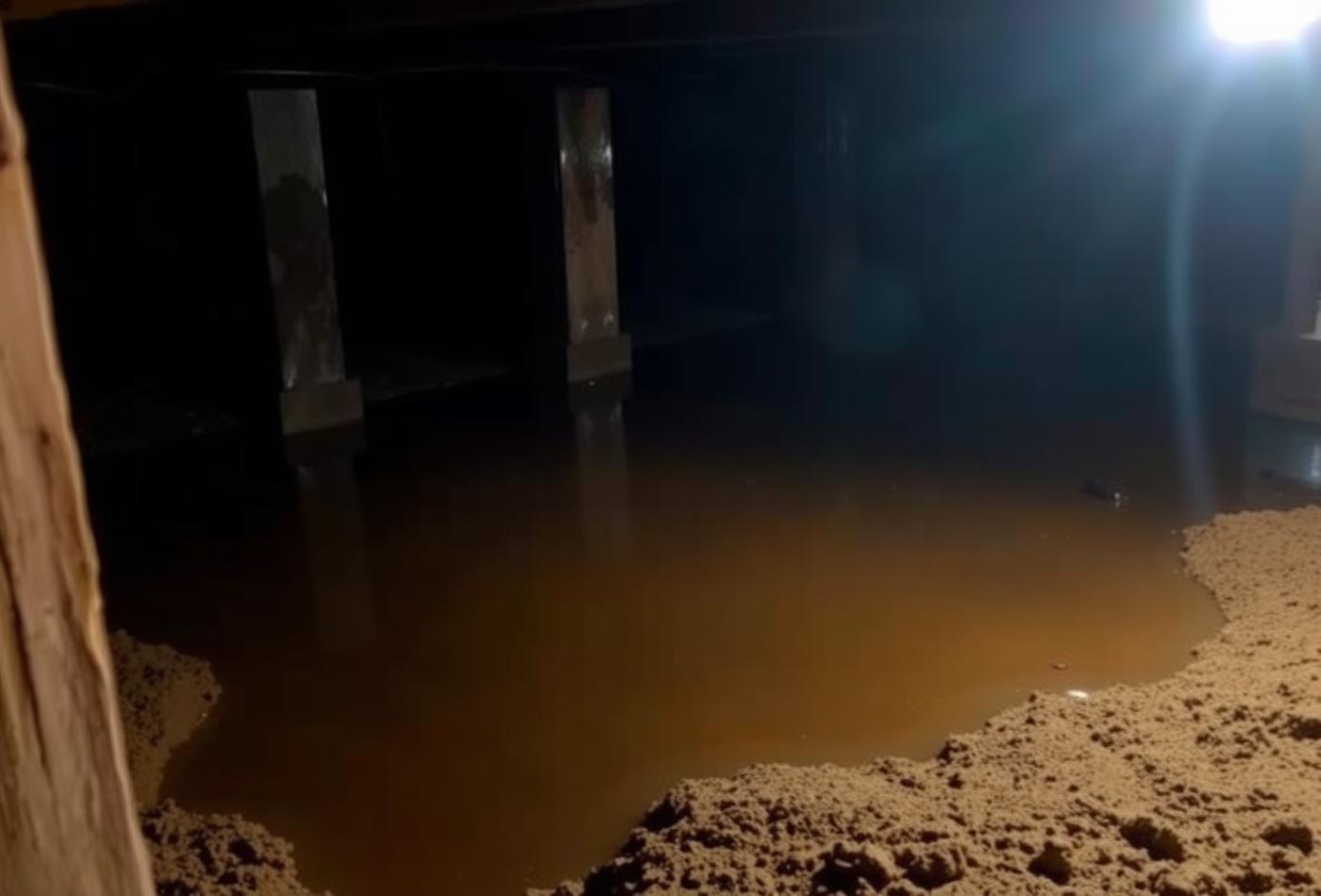
Drainage design starts with volume and timing. Water that appears during a storm and drains within a day is a surface problem. Water that arrives slowly and sits for a week is groundwater. The two need different systems.
- Rainwater entry: roof runoff concentrated at a corner, or water sheeting in through a vent opening
- Surface runoff: a driveway, patio or slope directing water at the foundation
- Groundwater: a seasonally high water table pushing up through the crawl space floor
- Standing water: low spots in the crawl space floor where water has nowhere to go — more on that here
- Plumbing: a supply or drain leak, which is a plumbing repair, not a drainage job
Components
What a crawl space drainage system includes
Perimeter drain
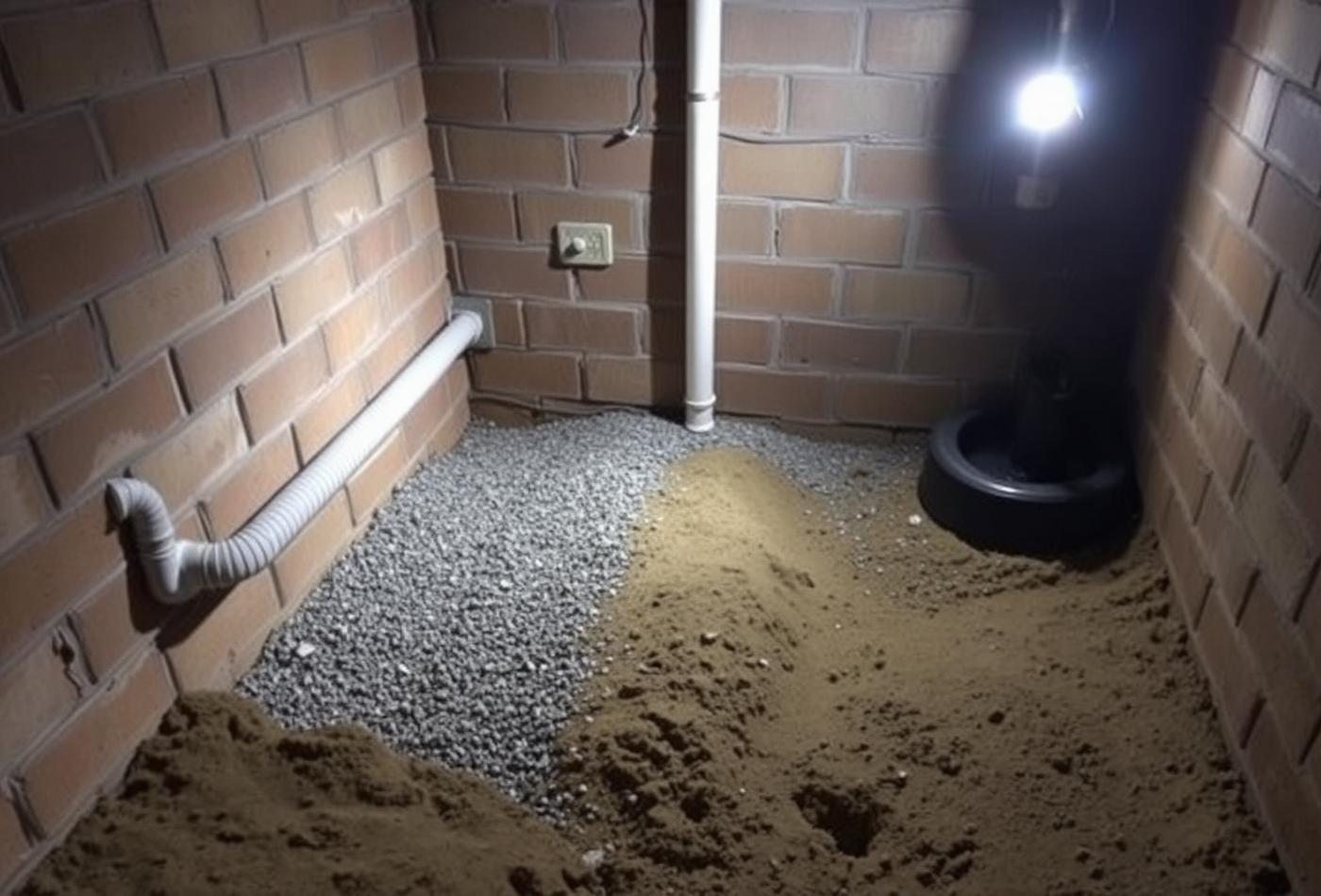
Perforated pipe bedded in washed stone in a trench along the wet perimeter, collecting seepage at the footing line before it spreads.
Sump basin and pump
A sealed basin at the low point, pump sized for the inflow, check valve and discharge line that carries water well away from the foundation.
Interior grading
Re-shaping low spots in the crawl space floor so water is directed toward the drain instead of pooling under the middle of the house.
Downspout extensions
Roof water carried away from the foundation rather than dumped at the corner, which is often the single biggest source.
Exterior grade correction
Soil built up and sloped away from the wall, mulch pulled back below the vent line so it doesn't wick water in.
Vapor barrier over dry ground
Once the drainage works, a reinforced barrier keeps soil vapor out of the space.
Read more →Process
How drainage work is scoped and installed
- 01Map the wet areasWe note where water shows, how deep it gets, and how long it stays — ideally with photos you've taken during a storm.
- 02Rule out the cheap fixesGutters, downspouts and grade get checked first. If those solve it, you don't need an interior system.
- 03Set the low pointElevation shot across the crawl space floor to locate where a basin belongs and which way the trench should fall.
- 04Trench and installTrench excavated, pipe bedded in stone, basin set, pump and check valve installed, discharge routed out.
- 05Test with waterThe system gets loaded and the pump cycled before backfill and liner work.
- 06Protect the spaceNew barrier installed over the corrected floor, and encapsulation added where the plan calls for it.
Water sitting under your house right now?
Take photos while it's wet — they help enormously. Then send an estimate request and we'll get in there.
Georgia soils
Clay, sand and why drainage behaves differently here
North Georgia's red clay holds water and releases it slowly, which is why metro Atlanta crawl spaces often stay wet for days after a storm even when the yard looks dry. Toward the coast around Savannah, flat lots and a high water table mean the crawl space floor can be close to the saturation line for much of the year. Sandier soils around Augusta drain quickly, so the tell is usually a fast rush of water during the storm rather than lingering pools.
The design follows the soil. Clay needs interception and a reliable discharge; sand needs entry control at the wall; high water table needs sump capacity. Drainage is often priced alongside sealing work — see the crawl space encapsulation cost guide for how the two combine.
Homeowner questions
Drainage questions
Do I need a sump pump in a crawl space?
A sump makes sense when water collects faster than it can drain by gravity — typically groundwater or a flat lot with no daylight outfall. If grade allows a gravity discharge, that's more reliable because it doesn't depend on power.
Can gutters and grading solve it without drainage?
Sometimes, and we always check that first because it's cheaper. Roof runoff dumped at the foundation and soil sloping toward the house are the most common reasons a crawl space floods after rain.
Where does the water discharge to?
To daylight away from the foundation where the lot allows, otherwise to an appropriate outfall. What we avoid is discharging where the water simply reroutes back toward the house or onto a neighbor's property.
Will drainage stop crawl space humidity?
It removes the liquid source, which lowers humidity a lot. Vapor from soil and humid outdoor air through the vents still need a barrier and, often, dehumidification.
Free estimate request
Get a Crawl Space Drainage Estimate
Describe when the water appears and how long it stays. That timing tells us more than almost anything else.
Related pages
- Water in crawl spaceCauses and first steps
- Standing water under houseWater that won't drain
- Crawl space waterproofingThe full water strategy
- EncapsulationAfter the space is dry
- Basement waterproofingBasement drainage systems
- Atlanta, GAClay soil and sloped lots