Crawl space problem
Standing Water Under Your House: Why It Won't Drain
Water that shows up after a storm is one thing. Water still sitting there a week later is a different signal — it means the crawl space has no functioning way to shed water, and the space is running at saturation the entire time.
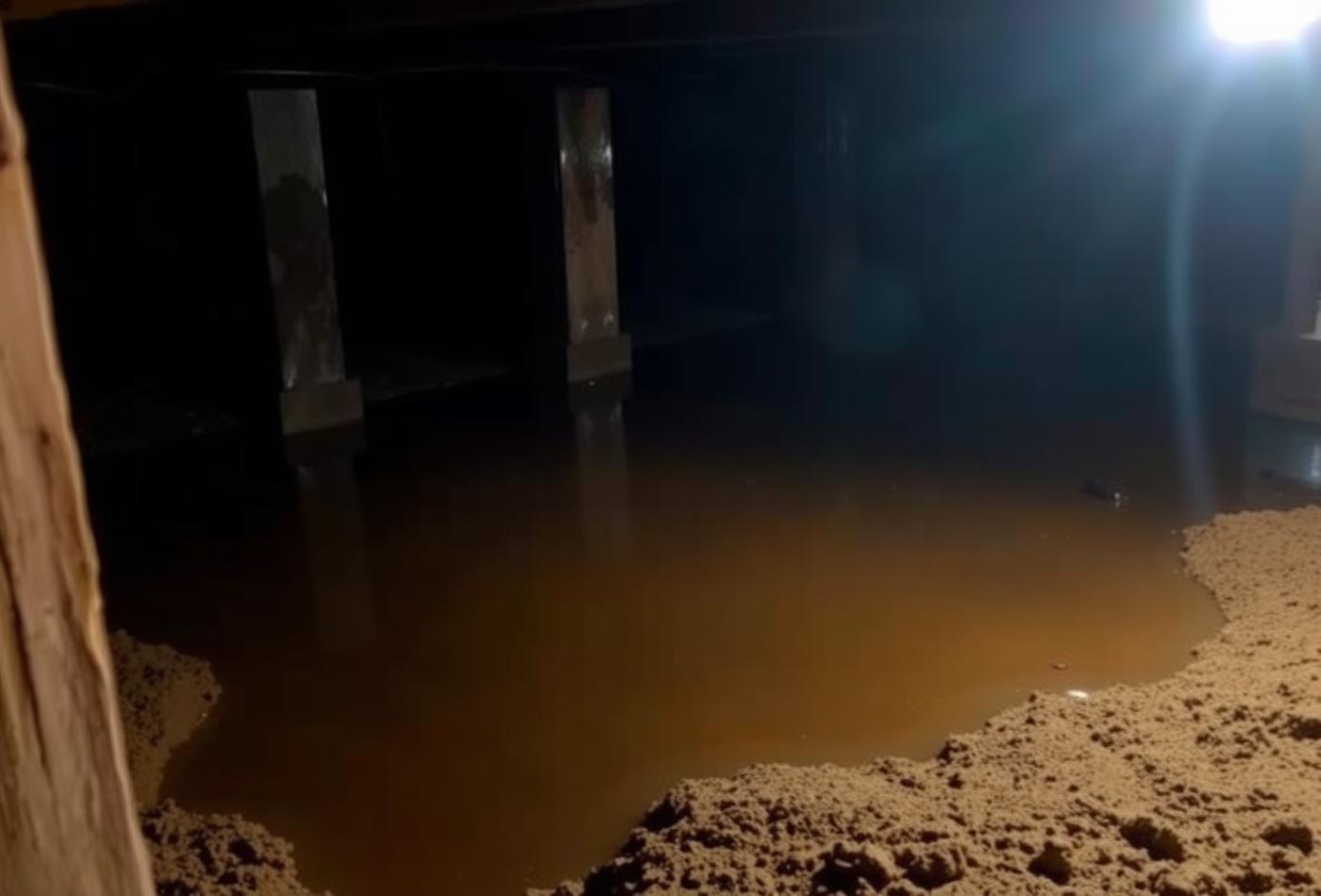
Diagnosis
The common causes of standing water
No interior fall or outlet
The crawl space floor was never graded toward a drain, so water that enters anywhere collects in the low spot and stays until it evaporates.
Poor drainage around the foundation
Downspouts discharging at the wall and no subsurface drainage means every storm delivers roof volume straight to the footing line.
Negative grading
Soil, mulch or a patio sloping back toward the house pushes surface water at the foundation instead of away from it.
Saturated clay and groundwater
Georgia clay holds water and drains slowly; when the surrounding soil is already full, water entering the crawl space has nowhere to go.
Plumbing leaks
A slow supply-line or drain leak keeps one area wet continuously, independent of the weather. Worth ruling out first.
Blocked or failed existing system
An old drain line silted shut, a sump pump that no longer cycles, or a discharge line crushed by tree roots or vehicles.
Solutions
How standing water gets removed for good
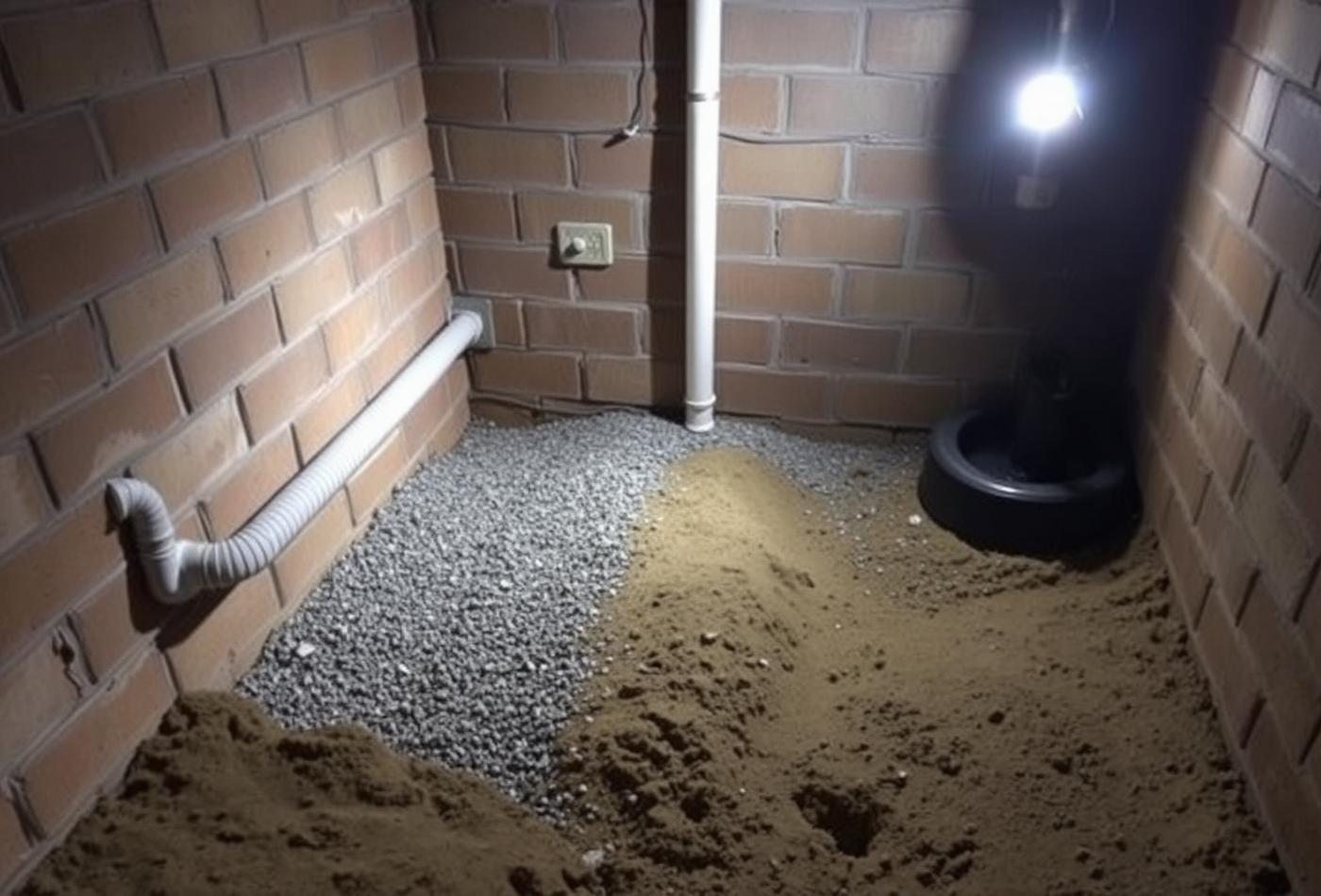
The scope follows the cause, and it's usually a combination rather than a single item.
- Exterior water management: downspout extensions, gutter capacity, and grade rebuilt to fall away from the wall
- Interior grading: low spots reshaped so water moves toward a collection point instead of ponding
- Perimeter drainage: pipe and stone intercepting seepage at the footing line — see drainage systems
- Sump and discharge: a basin, pump, check valve and a discharge that leaves the property line intact
- Plumbing repair: when the source is a leak, that gets fixed before anything else is priced
- Barrier and sealing afterwards: vapor barrier or full encapsulation once the space stays dry — see crawl space encapsulation cost for planning ranges
Sequencing
When encapsulation is appropriate — and when it isn't
Encapsulation is the right call once the crawl space is reliably dry. It's the wrong call as a response to standing water, because a liner is a vapor barrier, not a drainage system. Sealing an active water path means water pools on or under the liner where you can't see it, and the humidity problem continues while looking solved.
The honest sequence is: control the water, verify it stays controlled through a wet period where possible, repair what moisture damaged, then seal and control humidity. Any quote that skips straight to a liner over a wet floor deserves a question about where the water is going to go.
Water still standing under your house?
Take a photo before you pump it out — water level and location tell us a great deal about the entry path.
Regional context
Why this happens across Georgia
In metro Atlanta and North Georgia, the culprit is usually clay: it holds water long after the rain stops, so a crawl space that takes on water has to have a mechanical way out. Near Savannah and the coast, flat lots and a seasonally high water table can put the crawl space floor near the saturation line, where sump capacity matters more than slope. Around Columbus and Augusta, mixed soils mean it's worth confirming whether water is arriving from the surface or from below before committing to a system.
Homeowner questions
Standing water questions
How long can standing water sit under a house before it causes damage?
Damage isn't really about the puddle — it's about the humidity the puddle sustains. A crawl space that holds water for days runs near saturation, and wood at elevated moisture content for weeks at a time is where decay and surface growth begin.
Why doesn't the water drain away on its own?
Three common reasons: the crawl space floor has low spots with no fall toward an outlet, the surrounding clay soil is already saturated so there's nowhere for it to go, or the water table is temporarily above the crawl space floor level.
Is a sump pump the answer?
It's the answer when water arrives faster than gravity can clear it and there's no daylight outfall. If the lot allows a gravity discharge, that's preferable — no power, no pump to fail.
Could it be a plumbing leak instead?
Yes, and it's worth ruling out early. A leak produces a persistent wet area that doesn't correlate with rainfall, often directly beneath a bathroom, kitchen or water heater. That's a plumbing repair before it's a drainage job.
Free estimate request
Request a Standing Water Inspection
Tell us how deep it gets, where it sits and how long it lasts. We'll bring the right assessment tools.
Related pages
- Crawl space drainagePerimeter drains and sumps
- Crawl space waterproofingThe whole strategy
- Water in crawl spaceIf it drains but returns
- Crawl space repairDamage from long-term water
- EncapsulationThe step after drying out
- Savannah, GAHigh water table areas