Secondary service · Georgia
Basement Waterproofing in Georgia
Crawl spaces are our main focus, but plenty of Georgia homes — especially on sloped North Georgia lots — have full or partial basements with the same underlying issue: water arriving at the wall and no system to move it away.
Symptoms
What a water problem looks like in a Georgia basement
Basements below grade sit against soil that gets saturated during our heavy rain events. The signals are fairly consistent:
- Water appearing along the wall-floor joint during or shortly after rain
- Efflorescence — white mineral deposits — on block or poured walls
- Damp, darkened patches at one specific corner or wall section
- Musty odor that returns every summer regardless of cleaning
- Rust at the base of steel columns or appliance legs
- Peeling paint or bubbling finishes on lower wall areas
Systems
How basement water gets managed
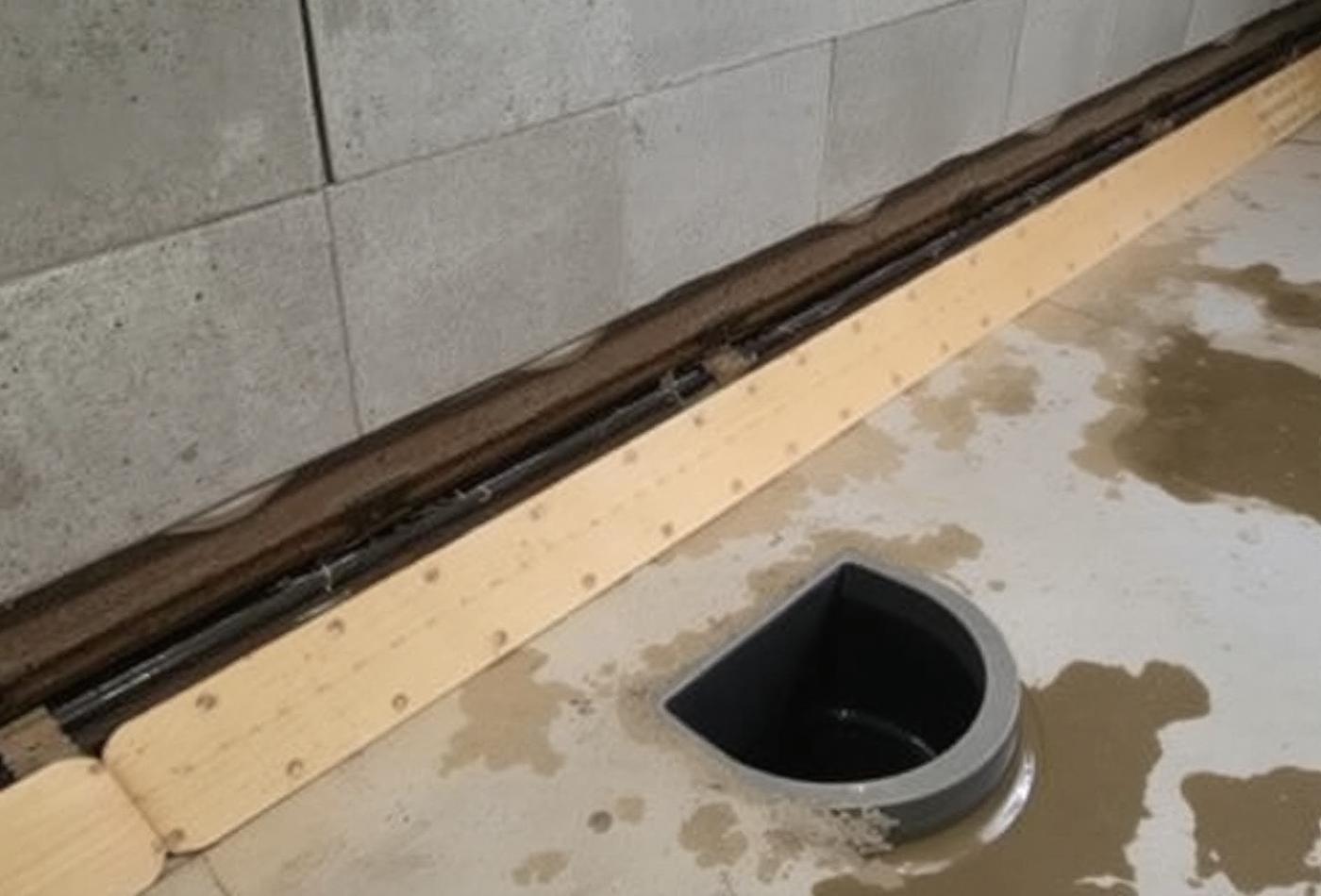
Interior perimeter drainage
A channel at the wall-floor joint that collects water arriving under the slab edge and carries it to a sump instead of onto the floor.
Sump basin and pump
Sealed basin with a pump sized for inflow, check valve, and a discharge line routed well away from the foundation.
Wall treatment
Membrane or drainage board directing wall seepage down into the drainage channel rather than across the finished floor.
Exterior corrections
Gutters, downspout extensions and re-grading, because reducing what arrives is cheaper than pumping it out.
Humidity control
Dehumidification once liquid water is handled, so the space stops smelling damp in summer.
Read more →Crawl space sections
Many Georgia homes have a basement plus a crawl space area. Both get assessed together so the drainage plan is coherent.
Read more →Basement wet after every storm?
We'll trace where the water is arriving and lay out interior and exterior options with an honest comparison.
Where this fits
Basement or crawl space — or both
Plenty of homes around Atlanta are split-levels with a basement under one half and a crawl space under the other. Treating only one side is a common mistake: water moves along the footing line, so a dry basement and a wet crawl space usually share a cause.
When we scope a job like that, drainage is planned as one system, then the crawl space portion is finished with a vapor barrier or full encapsulation as appropriate.
Budgeting for combined work? The Georgia encapsulation cost guide covers how drainage and sealing are priced together, and water in the crawl space explains the intrusion patterns we look for on the crawl space side.
Homeowner questions
Basement waterproofing questions
Is interior or exterior basement waterproofing better?
Exterior work addresses water before it reaches the wall, but it requires excavation and is disruptive and costly on a finished home. Interior drainage with a sump manages water that has already reached the wall or floor joint and is the practical choice for most existing Georgia basements.
Why does my basement only leak in one corner?
Almost always because water is being concentrated there — a downspout, a driveway slope, a low spot in the yard, or a subsurface path following the footing. That's why exterior conditions get reviewed before interior work is priced.
Do I need a dehumidifier in a waterproofed basement?
Frequently, yes. Once liquid water is controlled, Georgia summer humidity is still the reason a basement feels damp and smells musty. Humidity control is what makes the space usable.
Will sealing the walls with paint fix a leaking basement?
Waterproof coatings can help with minor dampness on the wall face, but they don't manage water arriving under pressure at the wall-floor joint. Coating over an active leak usually just moves where it shows up.
Free estimate request
Get a Basement Waterproofing Estimate
Tell us where water shows up and when. If the home also has a crawl space area, mention it — we'll look at both.
Related pages
- Crawl space waterproofingOur main water service
- Drainage systemsPerimeter drains and sumps
- Standing water under houseIf water sits below
- EncapsulationFinishing the crawl space
- Atlanta, GASloped lots and basements
- Cost guidePricing logic