Service area
Crawl Space Encapsulation & Moisture Control in Savannah, GA
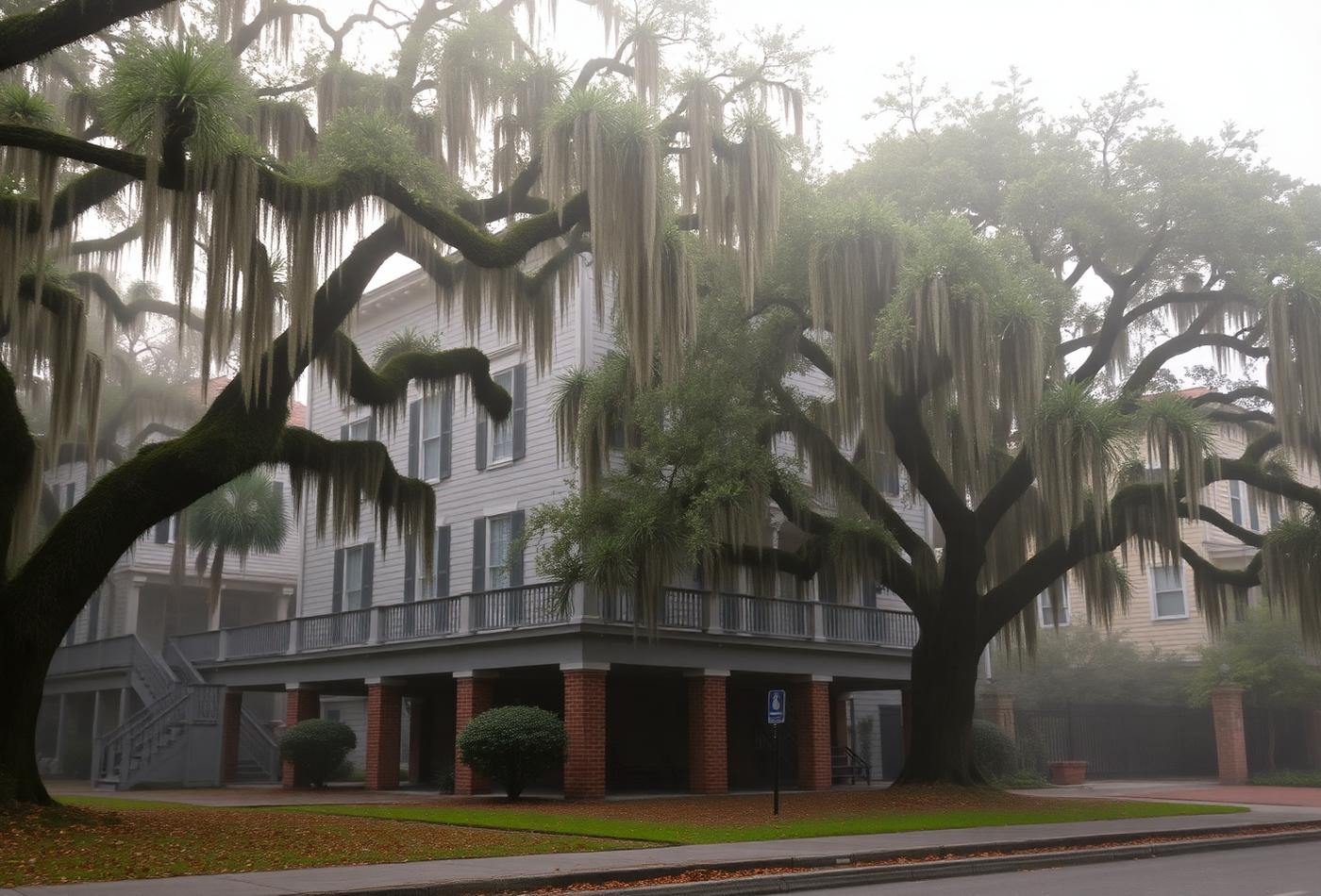
Savannah's climate is the hardest in Georgia on a crawl space. Sustained high dew points, sandy soil over a shallow water table, and salt air mean vented crawl spaces here run near saturation for months at a time — usually without a drop of visible water.
Local conditions
Why coastal crawl spaces stay wet
Along the coast, the dominant moisture source isn't rain — it's the air. When outdoor air at a high dew point moves through foundation vents into a crawl space that sits several degrees cooler, relative humidity climbs sharply and every surface below the dew point begins collecting condensation. Ductwork drips, joists absorb moisture, insulation saturates, and the odor follows the air upward into the house.
Scope drives the price more than location does. Most Savannah homes needing full crawl space encapsulation in Georgia land in the $5,000–$15,000 planning range; the encapsulation cost guide breaks down what moves that figure, and crawl space moisture problems explains what we look for during the inspection.
The second factor is elevation. Much of the Savannah area has a seasonally high water table, so after prolonged rain the crawl space floor can be near or below the saturation line. That's a different engineering problem from hillside runoff, and it's why we check floor elevation and existing discharge routes before recommending a system.
What we correct
The most common Savannah scopes
Chronic high humidity
Sealing vents and access, then dehumidifying to a target range so materials finally dry through summer.
Read more →Condensation on ducts and framing
Removing the moisture load so cold surfaces stop collecting water under the floor.
Read more →Persistent musty odor
Cleanout of damp materials and correction of the airflow path bringing that air into living space.
Read more →Water table intrusion
Sump systems sized for volume with a reliable, protected discharge route away from the home.
Read more →Failed or absent barriers
Reinforced liner across the floor and up the piers and walls, sealed rather than loosely laid.
Read more →Corroded connectors and decay
Structural repairs where long-term coastal damp has degraded framing, supports or hardware.
Read more →How we assess a crawl space
Our inspection method: source first, sealing second
Most failed crawl space work in Georgia comes from installing a product instead of solving a moisture path. This is the sequence we follow on every home, whether the job ends up being a vapor barrier or a full encapsulation with drainage and a dehumidifier.
- 01Find the water sourceGroundwater, surface runoff, a plumbing leak and condensation all look similar once the ground is wet. We look for the entry point before recommending anything.
- 02Check drainage and gradingGutters, downspout discharge, grade around the foundation and any existing crawl space drainage get inspected, because sealing over an active water path fails.
- 03Inspect the vapor barrier and framingWe note torn or missing barrier, wet insulation, staining on joists and subfloor, and any framing that has softened.
- 04Measure humidity and moistureRelative humidity in the crawl space and moisture readings in wood tell us whether a dehumidifier is genuinely needed or whether drainage alone solves it.
- 05Decide what the house actually needsDrainage, vapor barrier, full encapsulation, dehumidification, insulation or repair — in the order that fixes cause before symptom.
- 06Put it in writingYou get a scope and estimate that lists what is included, what is optional, and what we found. No pressure to decide during the visit.
You get a plain explanation of what we found, a written scope covering exactly what will be installed, and a recommendation based on the conditions measured in your crawl space.
Free crawl space inspections across coastal Georgia
We measure humidity and wood moisture on site, then show you the readings alongside the scope.
Homeowner questions
Savannah crawl space questions
Is encapsulation worth it on the Georgia coast?
It's arguably more valuable here than anywhere else in the state. Coastal dew points stay high for months, so a vented crawl space is exposed to moisture-laden air almost continuously. Sealing the space and controlling humidity is the only way to keep materials dry through a Savannah summer.
Do coastal crawl spaces always need a dehumidifier?
Most do. A vapor barrier removes the soil source, but coastal air infiltration and high ambient dew points usually leave enough residual moisture that mechanical drying is needed to hold a stable range. We size it against measured readings.
What about the high water table near the coast?
It changes the strategy. Water can rise into the crawl space from below rather than run in from the side, so sump capacity and a reliable discharge matter more than surface grading alone. We check crawl space floor elevation during inspection.
Can you work on historic homes?
Yes, with appropriate care. Older coastal homes often have masonry piers, low clearance and original framing worth protecting — which is exactly why controlling moisture matters there.
Free estimate request
Get a Free Savannah Crawl Space Inspection
Coastal humidity, standing water or a musty smell — tell us what you're dealing with and we'll take readings.
Related pages
- Crawl space encapsulationThe complete system
- Crawl space dehumidifierEssential on the coast
- High humidityThe coastal core issue
- Musty smellOdor from below
- Vapor barrierSealing the soil
- Cost guideWhat drives pricing