Crawl space problem
High Humidity in a Crawl Space: The Georgia Problem
A crawl space can be completely free of standing water and still be soaking the house in moisture. Humidity is the version of this problem you can't see — and in Georgia it's the one that affects the most homes.
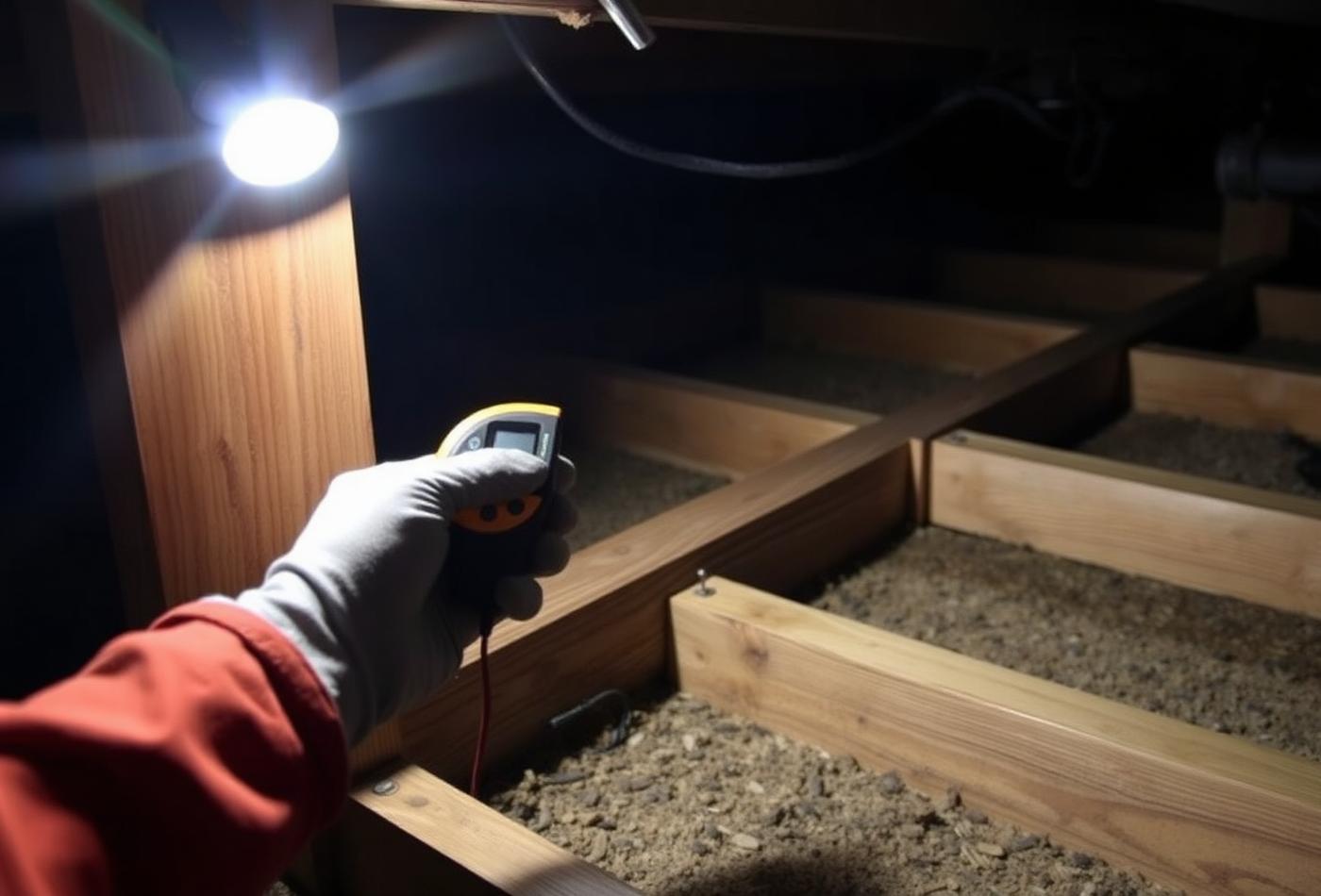
The mechanism
Why humid air makes a crawl space wet
Relative humidity describes how much moisture air holds compared with how much it could hold at that temperature. Cool the air and the percentage climbs, even though the moisture quantity hasn't changed. That's exactly what happens when 90°F outdoor air at a high dew point flows through a foundation vent into a crawl space sitting in the low 70s: the relative humidity spikes, and any surface cooler than the dew point starts collecting water.
Ductwork, cold water lines, metal connectors and the underside of the subfloor become condensation surfaces. Fiberglass insulation absorbs it. Wood absorbs it. And because there's no drying mechanism in a vented crawl space during a humid season, the cycle repeats daily for months.
Symptoms
What high crawl space humidity looks like
Condensation on ducts
Beads or drips on duct wrap and cold water lines during humid weather — the clearest visual indicator.
Damp, darkened wood
Joists and subfloor that read high on a moisture meter, sometimes with surface growth developing.
Read more →Musty odor upstairs
An earthy smell strongest at floor level and in closets, because crawl space air moves upward.
Read more →Sagging insulation
Batts that have absorbed enough moisture to fall out of the joist bays.
Read more →Sticking doors and cupped floors
Wood movement upstairs that follows the seasons, caused by moisture entering from below.
AC running longer
The cooling system working harder because it's dehumidifying air continuously resupplied from the crawl space.
The solution
How crawl space humidity gets controlled
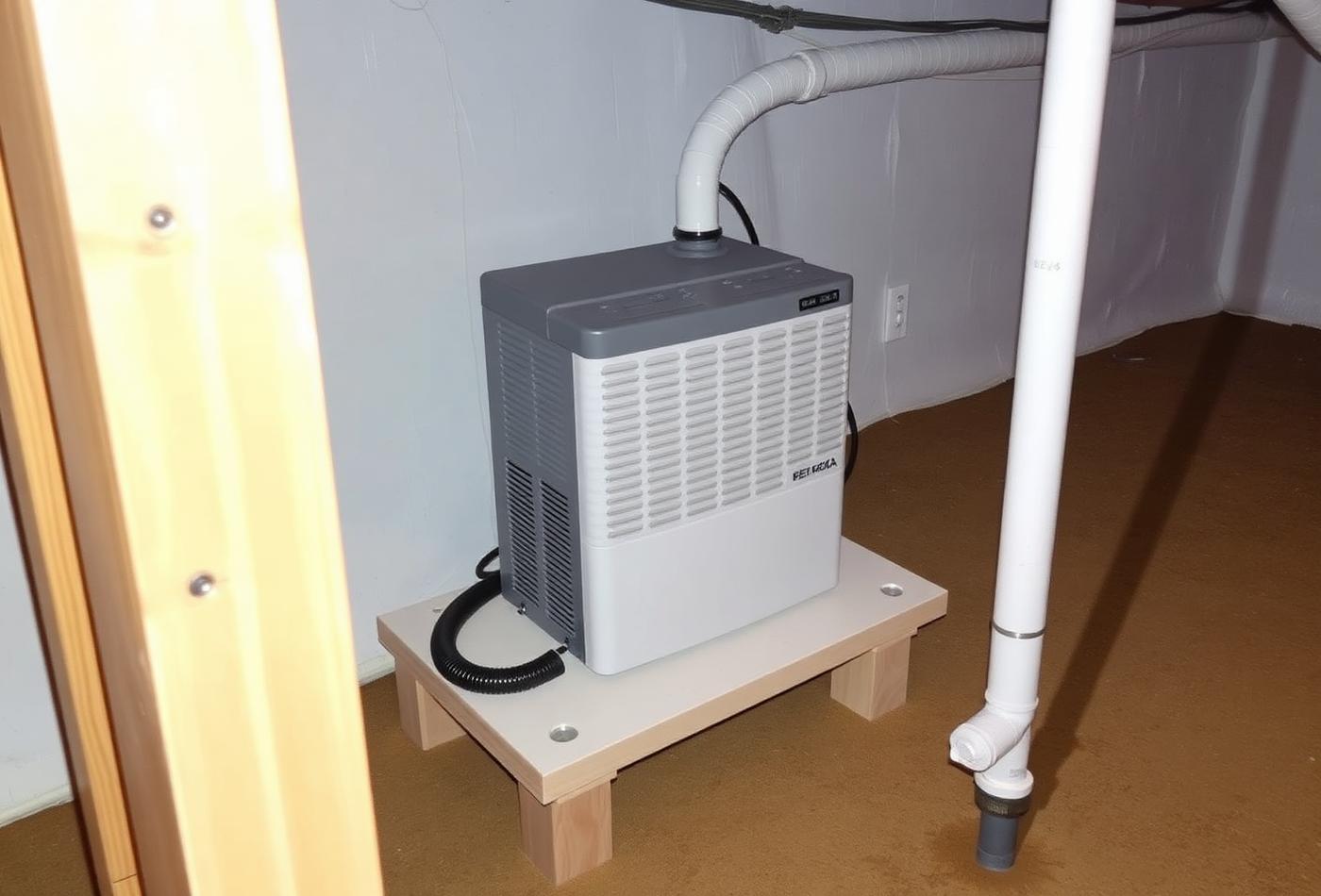
Humidity control works in a specific order, and skipping ahead is the usual reason a previous attempt didn't hold.
- Cover the soil: a reinforced vapor barrier across the full floor removes the largest continuous source
- Handle any liquid water: drainage where rain or groundwater enters
- Seal the envelope: vents, access door and rim penetrations closed so outdoor air stops washing through
- Remove wet materials: saturated insulation and debris out
- Dehumidify: a sized crawl space dehumidifier with a routed drain, set to a target range
- Verify: readings confirmed after the space has had time to stabilize
Combined, that's encapsulation — the reason it's the standard recommendation here is that Georgia's humid season is too long for partial measures.
Not sure whether it's humidity or a leak?
Wet wood with no puddles points to condensation. We'll measure both and tell you which problem you have.
Local context
Humidity by region in Georgia
Coastal Savannah holds the highest sustained dew points in the state, so sealed crawl spaces there almost always need mechanical dehumidification. Around Macon and Augusta, hot inland summers with muggy nights produce the same result slightly later in the season. In metro Atlanta, humidity problems frequently sit on top of a water intrusion problem, so both get addressed together. In Columbus, older housing with original barriers is the common starting point.
For budgeting, the encapsulation cost guide shows where dehumidification sits in a full scope, and a musty smell from the crawl space is often the first sign of the same condition.
Homeowner questions
Crawl space humidity questions
What is a normal crawl space humidity level?
In a sealed crawl space, 50–60% relative humidity is the practical target. Vented crawl spaces in Georgia routinely read 75–90% through summer, which is where condensation and material damage begin.
Won't opening the vents dry it out?
Not in a humid climate. Outdoor summer air brought into a cooler crawl space raises relative humidity there, because the same amount of moisture in cooler air means a higher percentage. Venting can make a Georgia crawl space wetter, not drier.
Why is there condensation on my ductwork?
Cold supply air makes duct surfaces colder than the surrounding dew point, so moisture condenses on them. It's one of the clearest indicators that crawl space humidity is too high.
Do I need a dehumidifier or just a vapor barrier?
A barrier removes soil vapor, which is usually the largest single source. If humidity still reads high once the ground is covered and the vents are sealed, a dehumidifier handles the remainder. We measure rather than assume.
Free estimate request
Get Crawl Space Humidity Measured
Tell us what you're noticing — condensation, odor, sticky floors — and we'll take readings before recommending anything.
Related pages
- Crawl space dehumidifierSizing and installation
- Vapor barrier installationCutting off soil vapor
- EncapsulationThe complete system
- Moisture & mold conditionsWhen wood is affected
- Musty smellThe odor side of humidity
- Cost guideBudget planning