Core service · Georgia
Crawl Space Insulation in Georgia
Insulation only works when it's dry. In Georgia crawl spaces, the usual finding is fiberglass that has absorbed years of humidity, dropped out of the joist bays and started holding moisture against the subfloor. Getting it right means fixing the environment, then insulating the right surfaces.
Diagnosis
Why crawl space insulation fails in a humid climate
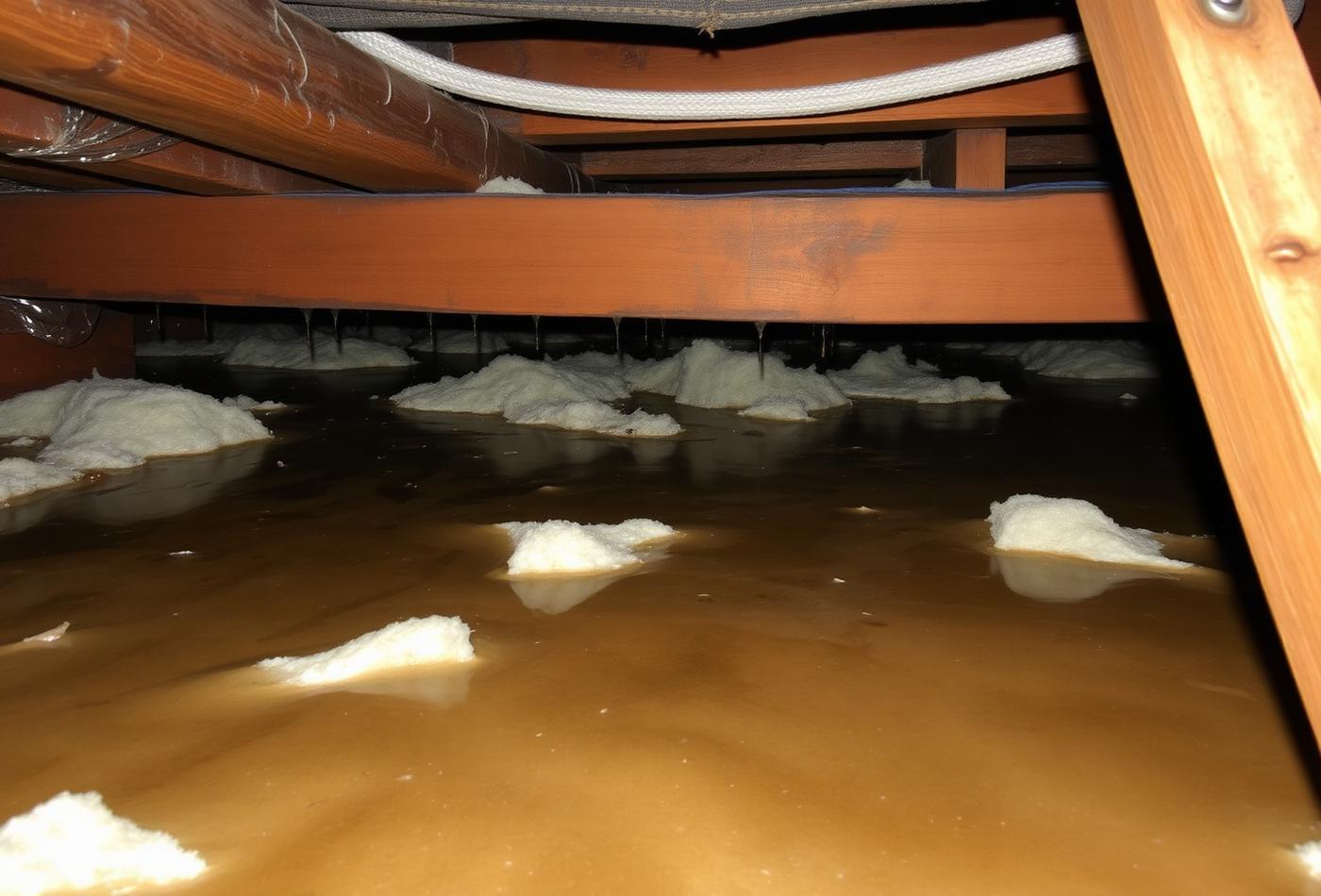
Batts installed between floor joists rely on staying dry and staying in contact with the subfloor. In a vented crawl space, humid summer air condenses on the cooler subfloor and the insulation right beneath it becomes a sponge. Wet fiberglass loses most of its thermal value and gets heavy enough to fall.
The material then does the opposite of its job: it keeps the wood it touches damp and hides developing problems from view. This is why we don't re-insulate a wet crawl space — the moisture condition is dealt with first.
Approach
What we do, and in what order
The order is the same every time, because insulation is the last layer, not the first.
- Remove and dispose of wet, compressed or fallen insulation
- Correct the water source — drainage, grading or plumbing
- Cover the soil with a reinforced vapor barrier
- Seal the envelope where encapsulation is the plan
- Insulate foundation walls and the rim joist in sealed crawl spaces
- Insulate the floor system where the crawl space stays vented
Detail
Wall and rim insulation in a sealed crawl space
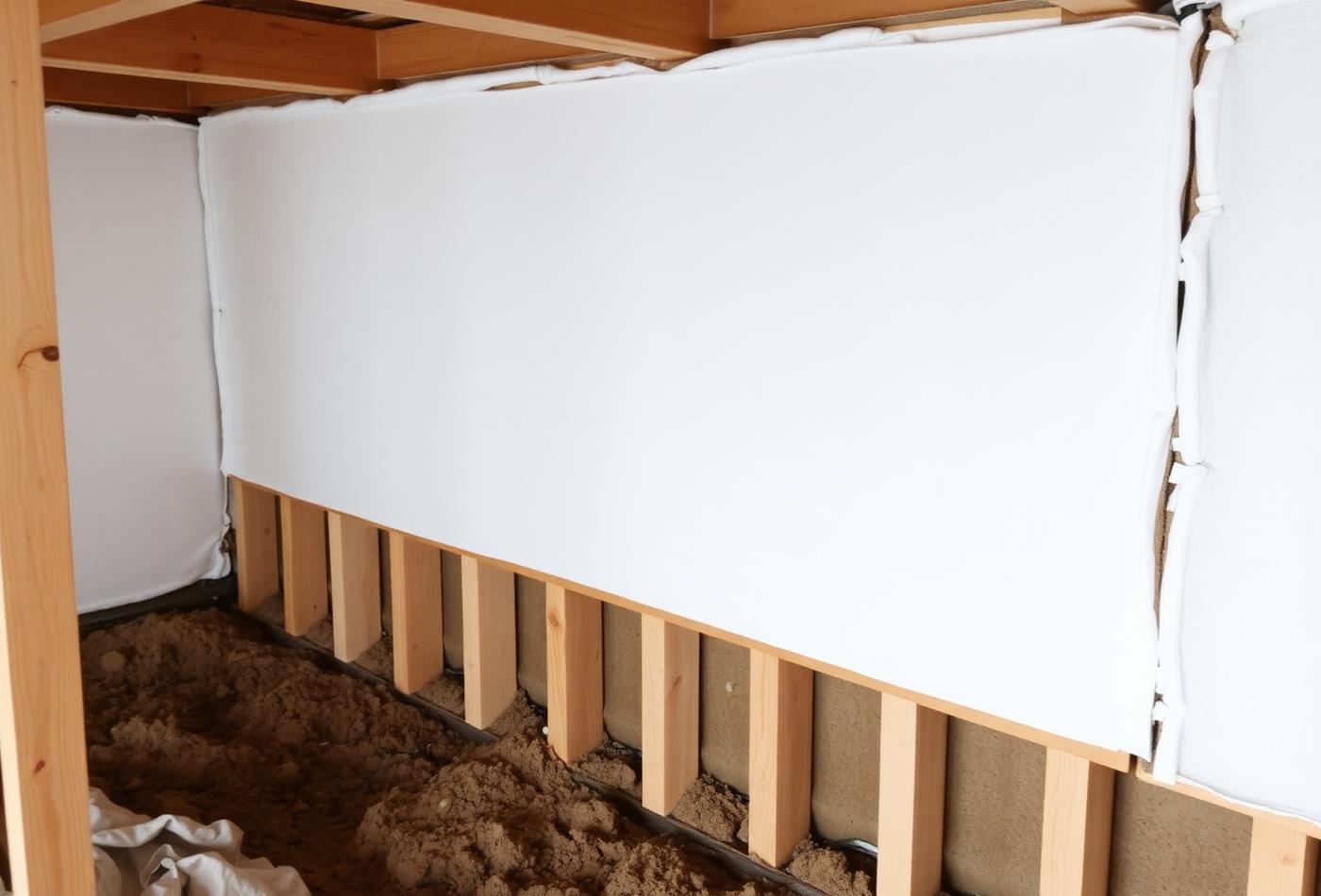
Once a crawl space is sealed, treating the foundation walls as the insulated boundary makes more sense than fighting to keep batts up under the floor. Rigid board against the wall, detailed at the top and bottom edges, gives a continuous layer that doesn't absorb moisture and doesn't sag.
The rim joist deserves particular attention — it's a large area of exposed framing at the top of the wall where outside air commonly leaks in. Sealing and insulating it improves comfort upstairs noticeably in both seasons.
Ductwork in the crawl space is worth reviewing at the same time. Torn duct wrap in a humid space becomes a condensation surface, and a sealed, dehumidified crawl space is far kinder to it. See humidity control and encapsulation for how those pieces fit together.
Insulation hanging down under your floors?
It's a symptom, not the problem. We'll identify the moisture source before recommending replacement.
Comfort and energy
What homeowners notice afterwards
The most common feedback after a crawl space is dried, sealed and insulated properly is that floors stop feeling cold in January and stop feeling clammy in July, and that the air conditioner cycles less in humid weather. That second part is because the crawl space is no longer supplying moist air to the living space above it.
Savings depend on your house, your equipment and your habits, so the useful measure is the crawl space itself: we take humidity readings before the work and again afterwards, and show you both.
Insulation is usually one line item in a larger scope: the encapsulation cost guide shows where it sits, high crawl space humidity explains why batts fail here, and homeowners in metro Atlanta see it most often in 1970s–90s ranches.
Homeowner questions
Crawl space insulation questions
Why does crawl space fiberglass keep falling down?
Because it gets wet. Fiberglass batts absorb moisture from humid crawl space air, gain weight, and pull away from the supports holding them against the subfloor. Once they sag, they hold dampness against the wood.
Should insulation go in the floor or on the walls?
In a vented crawl space, insulation goes in the floor system. In a sealed and conditioned crawl space, insulating the foundation walls and rim generally performs better because the crawl space becomes part of the home's thermal envelope.
Do I need to remove old insulation first?
If it's wet, compressed or falling out of the bays, yes. Leaving saturated material in place traps moisture against framing and defeats whatever gets installed afterwards.
Will insulation make my floors warmer?
Usually noticeably, especially over an unheated crawl space in winter. But dry conditions matter first — insulation installed in a wet crawl space underperforms and deteriorates.
Free estimate request
Get a Crawl Space Insulation Quote
Tell us what the current insulation looks like — intact, sagging, wet or missing — and roughly how large the crawl space is.
Related pages
- EncapsulationSealing before insulating
- High humidity crawl spaceWhy batts get wet
- Crawl space repairDamage under wet insulation
- DehumidifierKeeping the space dry
- Columbus, GAChattahoochee Valley homes
- Cost guideRemoval and insulation costs