Conditions · Georgia
Crawl Space Moisture, Damp Wood & Mold-Related Conditions in Georgia
Damp joists, condensation on ducts and patchy growth on framing all describe the same underlying situation: a crawl space that stays wet long enough for materials to change. Correcting it means changing the conditions, not just cleaning what's visible.
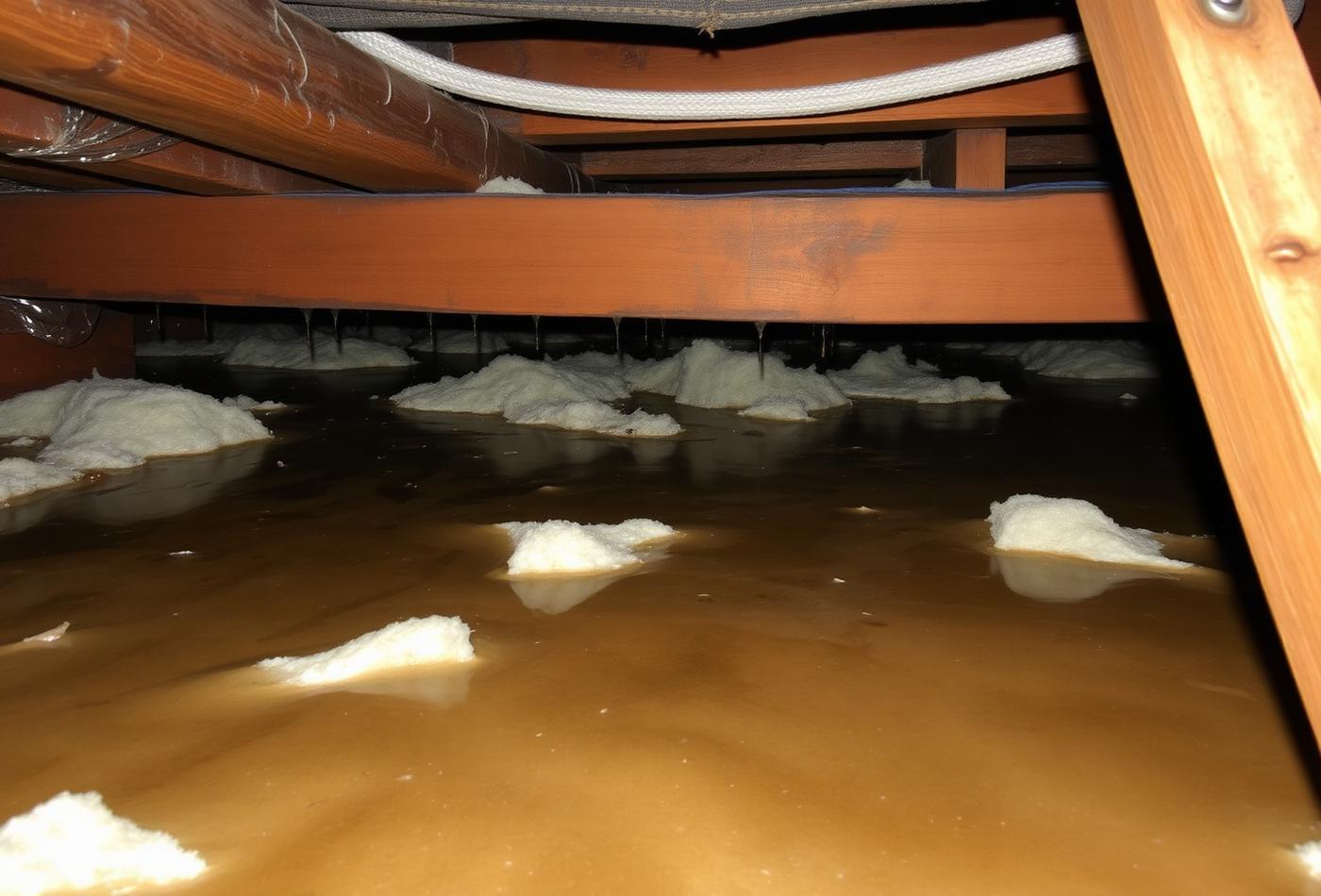
Mechanism
How a crawl space gets and stays damp
Three moisture paths operate under a typical Georgia house. Vapor rises continuously from bare soil. Humid outdoor air enters through foundation vents and condenses on cooler surfaces. And liquid water enters after rain when grading, gutters or drainage aren't managing runoff.
Wood is hygroscopic — it takes moisture from the air around it. Once wood moisture content climbs and stays elevated, the crawl space has the two things surface growth needs: a food source and sustained dampness. Temperature under a Georgia house is already in a favorable range most of the year, so moisture is the only variable we can control — and it's the one that matters.
What we look for
Reading the crawl space
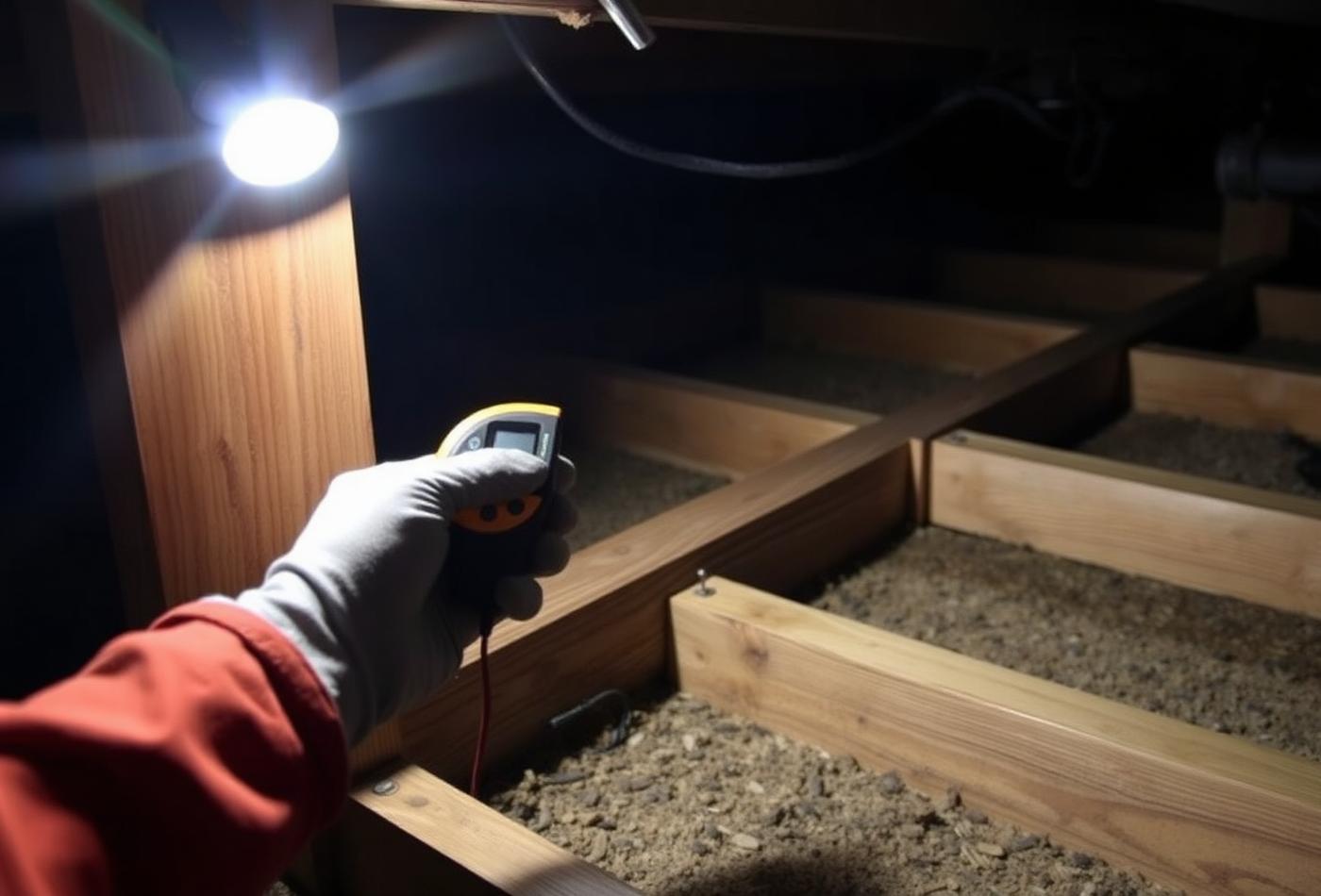
Assessment is observational and measured, not guesswork. On a typical inspection we record:
- Relative humidity in the crawl space, and outdoor conditions for comparison
- Wood moisture readings at joists, girders, subfloor and rim
- Condensation on ducts, water lines and metal connectors
- Staining patterns that show where water has traveled
- Condition and coverage of any existing vapor barrier
- Insulation saturation and where it has fallen
- Evidence of standing water, seepage lines or active leaks
Those readings decide whether you need drainage, a barrier, a sealed envelope, dehumidification, or several of them in a specific order.
Correction
How the environment gets fixed
- 01Remove what's holding moistureWet insulation, old plastic, debris and organic material come out. They keep the space damp and hide the framing.
- 02Shut off the waterGrading, downspouts, drainage or a plumbing repair — whichever the inspection identified as the source.
- 03Address affected framingSurfaces cleaned where appropriate and any structurally affected members repaired before sealing.
- 04Separate soil from airReinforced vapor barrier across the full floor, seams sealed, piers detailed.
- 05Close the envelopeVents, access and rim penetrations sealed so humid outdoor air stops feeding the space.
- 06Hold the humidity downDehumidification set to a target range and verified, so conditions can't drift back.
We describe conditions we can observe and measure. We don't identify organisms, provide laboratory testing, or make claims about health effects.
Damp wood or growth under your floors?
Get the moisture measured before anything is cleaned or covered. The readings decide the right scope.
Warning signs
Signals worth acting on
- Earthy or sour smell strongest near floor vents and closets
- Visible condensation on duct wrap or copper lines
- White, grey or dark patches on joists and subfloor
- Insulation that has fallen out of the bays
- Rust on hangers, straps and duct hardware
- Crawl space humidity readings in the 70s or 80s
If the odor is what's bothering you most, start with musty smell from the crawl space. If it's the summer stickiness, start with high humidity. If there's visible water, go to water in the crawl space.
For pricing, the Georgia encapsulation cost guide covers how remediation and sealing are scoped together. Coastal homeowners can also read about conditions in Savannah, where sustained humidity keeps these problems recurring.
Homeowner questions
Moisture and mold-related questions
Is the growth on my crawl space joists mold?
Surface growth on damp crawl space wood is common, and it can look like white, grey or black patches. We describe what we observe and measure the moisture that allows it, rather than diagnosing species — identifying organisms is a testing laboratory's job, not ours.
Can you remove mold from a crawl space?
Our work targets the conditions: removing wet materials, correcting the water source, sealing the soil and controlling humidity. Where cleaning of framing surfaces is appropriate we address it as part of the scope, but the durable fix is a dry crawl space, because growth returns wherever moisture returns.
What humidity level stops the problem?
Keeping the crawl space in the 50–60% relative humidity range and wood moisture content below roughly 18% removes the conditions growth depends on. That's the target a sealed, dehumidified crawl space is set to hold.
Does crawl space moisture affect the air in my house?
Air does move upward from a crawl space into the living space through floor cavities and penetrations, carrying humidity and odor with it. We can speak to moisture and odor. We don't make health claims — questions about health belong with a medical professional or an indoor air quality specialist.
Free estimate request
Get a Crawl Space Moisture Assessment
Tell us what you're seeing and smelling. We'll measure humidity and wood moisture before recommending any work.
Related pages
- EncapsulationThe long-term correction
- Vapor barrierCutting off soil vapor
- DehumidifierHolding humidity in range
- Crawl space repairIf framing is affected
- Savannah, GACoastal humidity conditions
- Cost guideWhat the work runs