Core service · Georgia
Crawl Space Repair in Georgia
Crawl space repair covers everything moisture damaged on the way in: soft joists, sagging girders, failed piers and posts, ruined insulation and shredded barrier. Repairs come before sealing, so the space you close up is sound.
Symptoms
What homeowners notice first
Most repair calls don't start with the crawl space — they start with the floor above it. A hallway that flexes underfoot, a bedroom door that suddenly won't latch, a slope you can feel walking across a room, or a soft patch near an exterior wall. Those are signals that something below has moved or weakened.
When we get under the house, the cause is usually moisture that has been working for years: damp bearing points, a pier that has settled into saturated clay, or a girder end sitting in a pocket that stays wet. Correcting the framing without correcting the water means the repair is temporary.
Scope
Common crawl space repairs
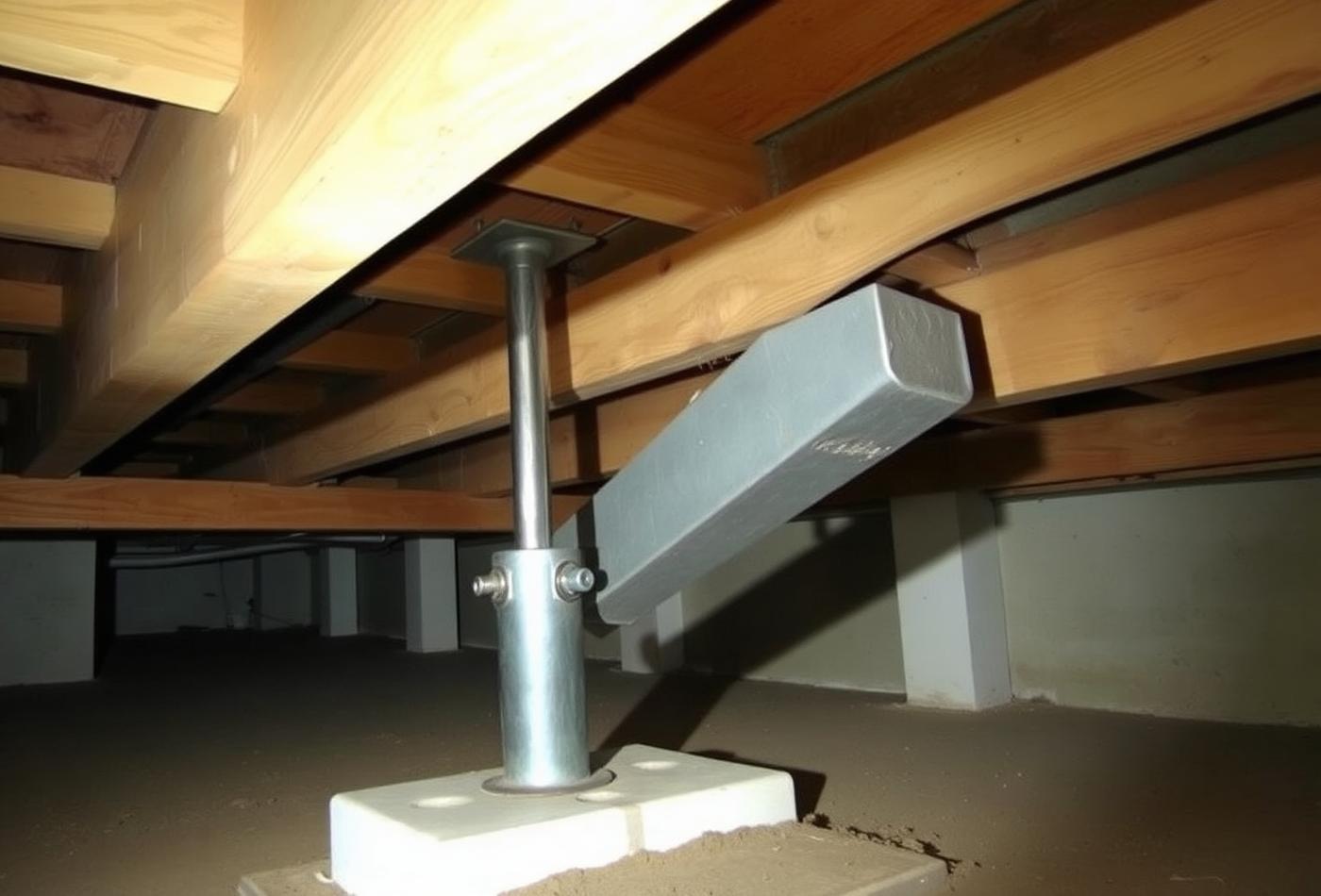
Support posts and piers
New adjustable steel posts or rebuilt piers on proper footings where existing supports have settled, cracked or rotted at the base.
Joist and girder repair
Sistering onto sound material or replacing members that have lost strength at bearing points and rim locations.
Subfloor sections
Replacing delaminated or soft sheathing under bathrooms, kitchens and exterior door thresholds.
Insulation removal
Pulling out saturated fiberglass that is holding moisture against the subfloor, then insulating the sealed envelope properly.
Read more →Vapor barrier replacement
Removing torn, displaced or undersized plastic and installing a reinforced barrier across the full floor.
Read more →Access, vents and rim
Rebuilding access doors, repairing vent frames and closing rim gaps that let outside air and pests in.
Why moisture causes it
How damp crawl spaces damage framing
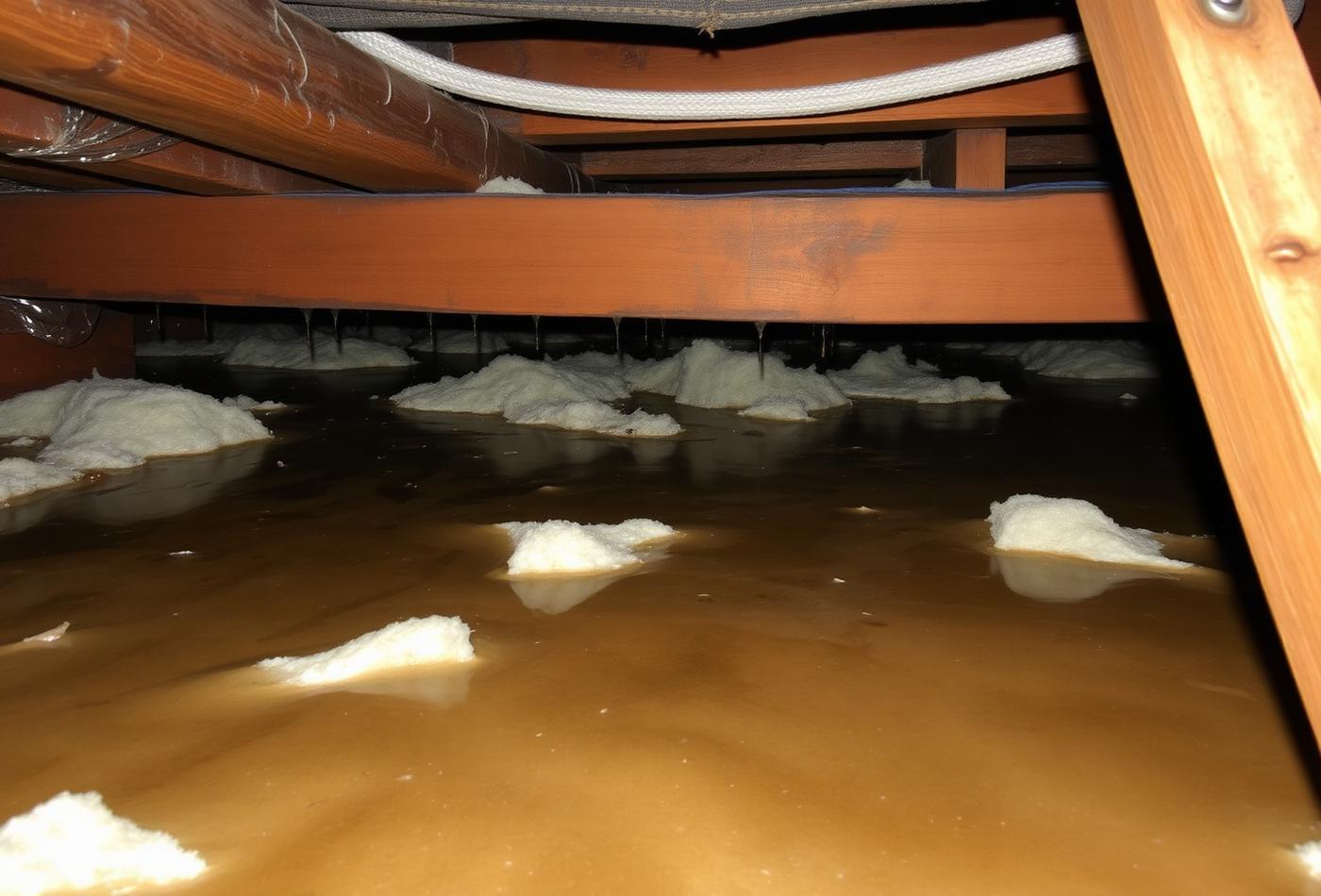
Wood in a crawl space that regularly runs above roughly 20% moisture content stops being a dry building material. It softens, holds surface growth, loses fastener grip and becomes attractive to wood-destroying insects. None of that happens overnight — which is why damage is usually widespread by the time a floor feels different upstairs.
Metal suffers too. Joist hangers, straps and duct components corrode, and corrosion at a connector can matter more than the condition of the wood around it.
We photograph what we find, note moisture readings, and separate what needs repair now from what only needs monitoring once the space is dry.
Floors moving, or wood that looks wrong?
An inspection tells you what's structural, what's cosmetic, and what the moisture source is behind it.
Sequence
Repair first, then seal
The order matters more than most homeowners expect. Water control comes first so repairs aren't installed into a wet environment. Framing and support work comes second. Then the space gets a new barrier and, where appropriate, full encapsulation with humidity control so the repair has a stable environment to live in.
If a quote you've received includes a liner but no explanation of the moisture source or the condition of the framing, it is worth asking what happens to the wood after it's covered.
Repairs are priced before sealing, and the encapsulation cost guide explains how much they can move a project. If the trigger was standing water under the house, that gets solved first — a common sequence on the clay lots around metro Atlanta.
Homeowner questions
Crawl space repair questions
How do I know if crawl space damage is structural?
Bouncy or sloping floors, doors and windows that shift out of alignment, visible sag in a girder line, or wood that can be probed with a screwdriver all suggest the framing itself needs attention rather than just a moisture fix.
Do you replace joists or sister them?
It depends on how much sound material remains. Localized decay at a bearing point is often addressed by sistering with new lumber onto solid wood; a member that has lost significant section is replaced.
Should repairs happen before encapsulation?
Yes. Cutting, drilling and dragging lumber through a finished liner damages it. Framing, support and subfloor work is completed first, then the space is sealed.
Can you repair a crawl space access door and vents?
Yes — access doors, damaged vent frames and rim penetrations are common repair items, and they matter because they are how outside air and animals get in.
Free estimate request
Request a Crawl Space Repair Assessment
Describe what you're feeling in the floors or seeing under the house and we'll arrange an inspection.
Related pages
- Crawl space waterproofingFixing the cause
- EncapsulationProtecting repaired framing
- Moisture & mold conditionsDamp wood and growth
- Crawl space insulationReplacing wet fiberglass
- Macon, GAOlder pier-and-beam housing
- Cost guideHow repairs affect price