Core service · Georgia
Crawl Space Encapsulation in Georgia
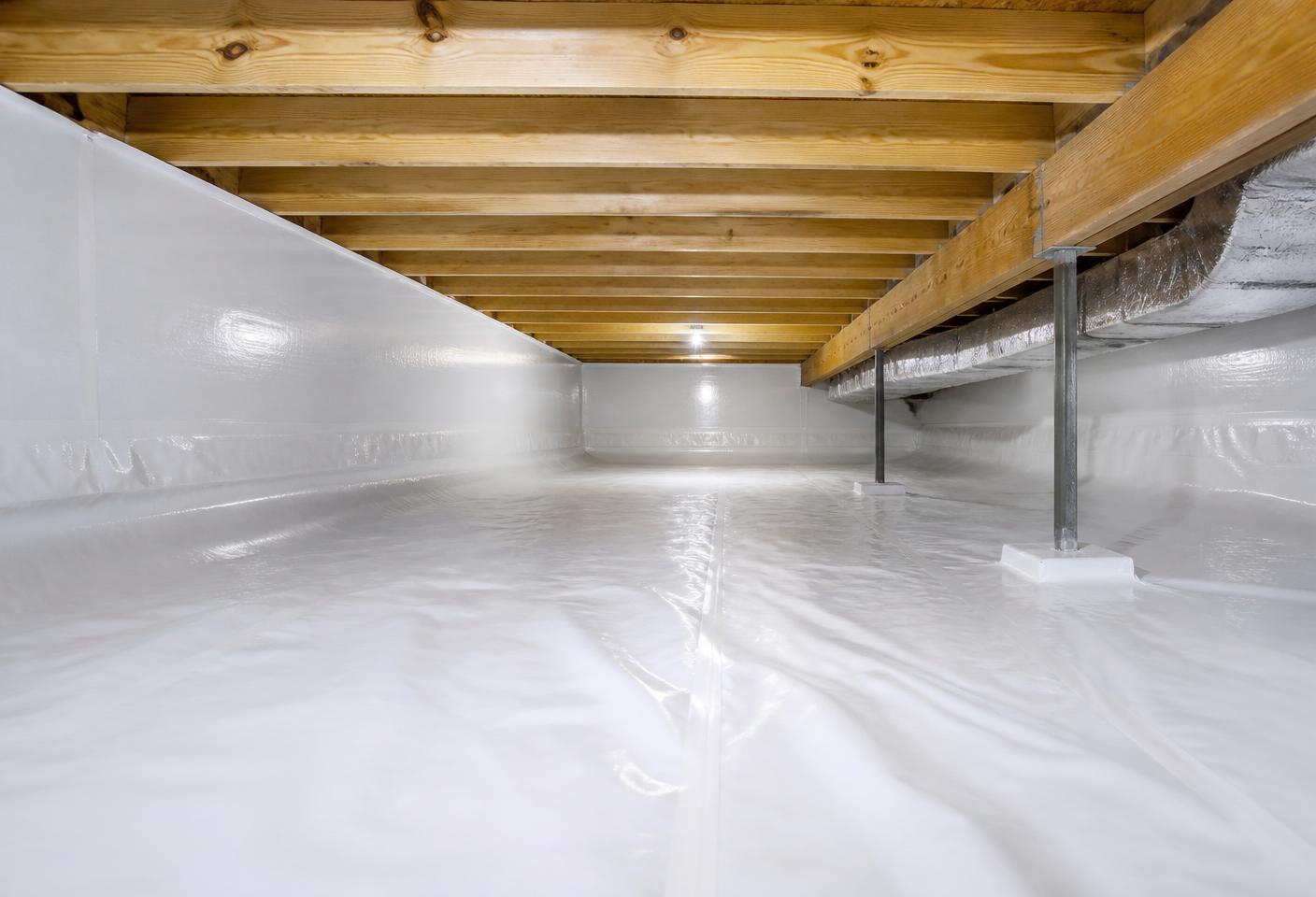
Encapsulation turns a damp, vented crawl space into a sealed, controlled part of the house. Done properly it is not just plastic on the ground — it is a continuous barrier across the soil and up the walls, a closed envelope, and a humidity level that stays in range through a Georgia summer.
The problem it solves
Why a vented crawl space stays wet in Georgia
The original logic behind foundation vents was that outside air would dry the space beneath the floor. In a humid Southeastern climate the opposite happens for much of the year. Warm outdoor air holds a lot of moisture; when it enters a crawl space that sits several degrees cooler, the air gives that moisture up onto joists, subfloor, ductwork and metal connectors.
At the same time, bare soil releases moisture continuously. A thin sheet of plastic laid loose over part of the floor slows almost none of it. The crawl space becomes a reservoir that feeds the house through air movement — which is why the symptoms usually show up upstairs as humidity and a musty smell before anyone looks below the floor.
Scope
What a complete encapsulation includes
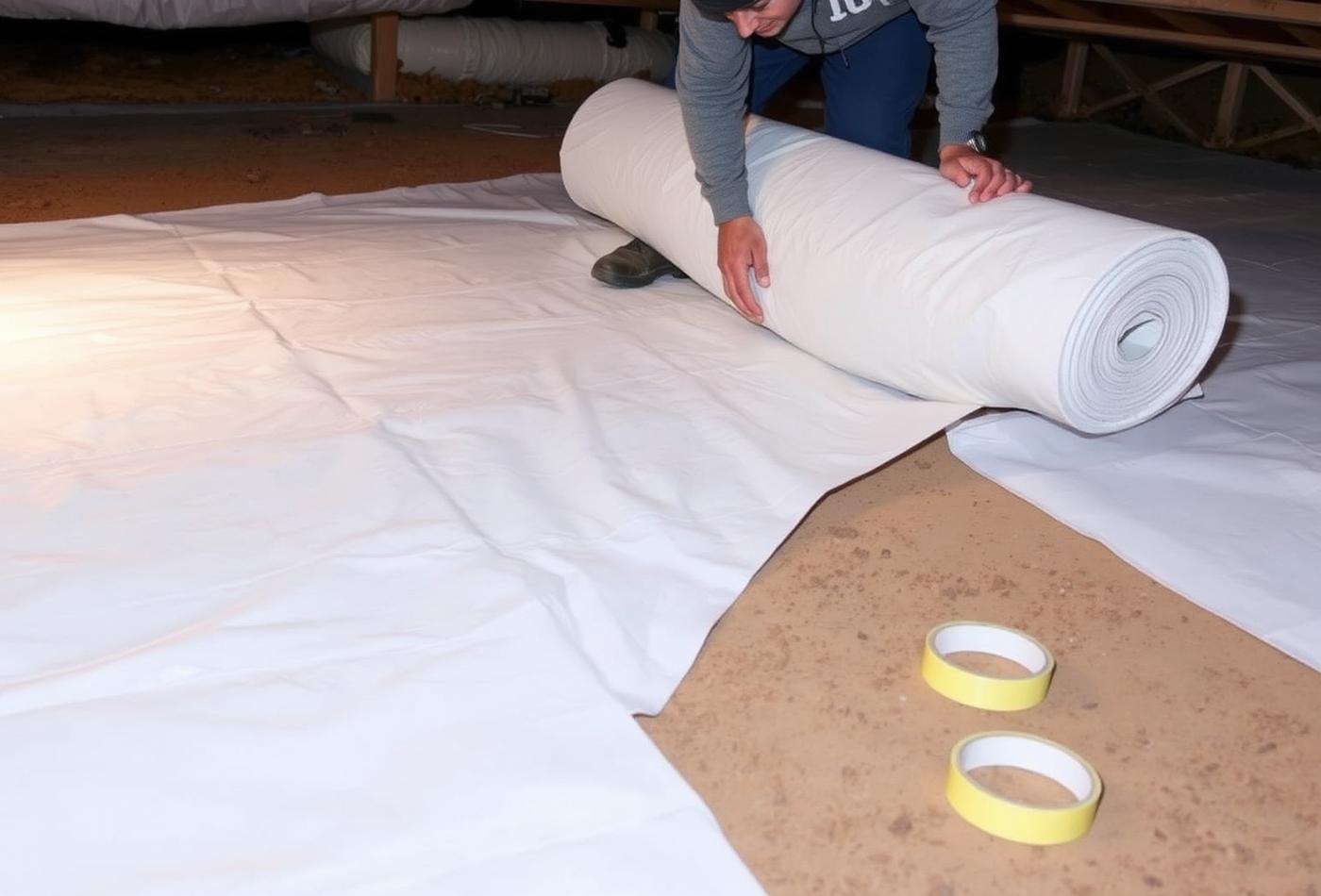
Every component below has a job. Skipping one usually explains why a previous "encapsulation" didn't hold.
- Clean-out: old plastic, wet fiberglass, construction debris and organic material removed
- Water control first: drainage or grading corrections where liquid water enters
- Ground barrier: reinforced vapor barrier across the full floor, seams lapped and taped
- Wall and pier sealing: liner carried up foundation walls, mechanically fastened and sealed at the top edge
- Envelope closure: vents, access door and rim penetrations sealed
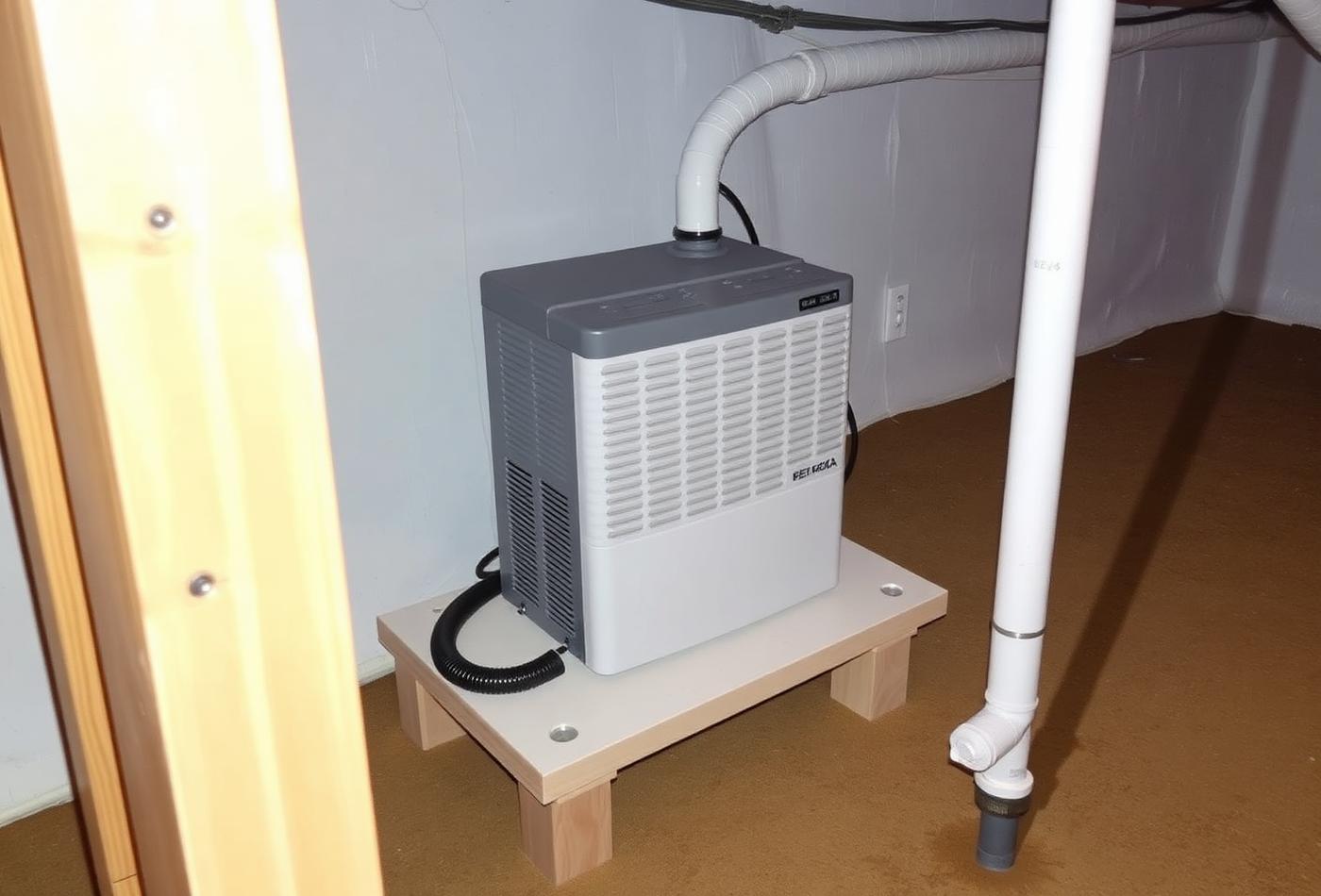
- Humidity control: dehumidification sized to the volume, with a condensate route
- Repairs as required: framing and support work handled before sealing, not after
Process
What the work looks like on your house
- 01Inspection and scopeAccess check, moisture readings, drainage review and photos. You get a written scope naming what is included and what is optional.
- 02Day one: clear and correctDebris and failed materials out. Water paths addressed — downspouts, grading notes, trenching and sump work when specified.
- 03Liner installationFloor liner placed, seams sealed, then wall liner fastened. Piers wrapped so the barrier stays continuous.
- 04Sealing the envelopeVents and access door sealed, rim gaps closed, plumbing and wiring penetrations detailed.
- 05Dehumidifier commissioningUnit set on a platform, drain routed to daylight or a pump, humidity target set and verified.
- 06WalkthroughBefore and after photos, what to watch for, and how to keep the space serviceable for future trades.
Not sure whether you need encapsulation?
Some crawl spaces need drainage and a new barrier, not a full sealed system. Describe the problem and we'll tell you which one applies.
Budget
What drives encapsulation cost
Two crawl spaces of the same size can differ substantially in price. The variables that matter most are square footage, liner thickness, whether water has to be managed with drainage or a sump, whether a dehumidifier is included, how much debris and wet insulation comes out, and how much clearance a crew has to work in.
We publish the ranges and the reasoning rather than a headline number, because a fixed price before an inspection is guesswork. See the Georgia cost guide →
- Crawl space square footage and clearance height
- Liner thickness and how much wall area gets covered
- Drainage, sump or grading work needed first
- Dehumidifier capacity and drain routing
- Debris and wet insulation removal
- Framing, support or subfloor repairs
Local context
Encapsulation across Georgia
Priorities shift by region. Around Atlanta, sloped lots and red clay mean runoff management usually comes before sealing. On the coast near Savannah, sustained humidity and a high water table make dehumidification and barrier detail the deciding factors. In Macon, Augusta and Columbus, older pier-and-beam homes often need barrier replacement and support repairs at the same time.
Homeowner questions
Encapsulation questions
What is included in a crawl space encapsulation?
A reinforced vapor barrier across the entire soil floor with lapped and taped seams, liner run up and fastened to the foundation walls and piers, sealed vents and access door, sealed penetrations, and humidity control — usually a sized dehumidifier with a routed condensate line. Drainage or repairs are added when the inspection shows they are needed.
Does encapsulation include sealing the foundation vents?
Yes. A sealed crawl space only works as a system: if vents stay open, humid Georgia air keeps washing across the framing and the dehumidifier fights the outdoors. Vents and the access door are sealed as part of closing the envelope.
Do I still need a dehumidifier after encapsulation?
Often yes, at least in the humid months. Sealing removes the biggest moisture source, but soil, air leakage and seasonal conditions can still push humidity up. We measure and size for the space rather than adding a unit by default.
Can encapsulation be installed if there is standing water?
Not as the first step. Liquid water has to be controlled first through grading, downspout corrections, perimeter drainage or a sump. Sealing over active water traps it and creates a worse problem.
How long does an encapsulation last?
Quality liner installed and fastened properly is a long-term installation. What shortens its life is being walked on by trades, punctured during other repairs, or being asked to hold back water it was never designed to handle.
Free estimate request
Get a Free Crawl Space Estimate
Send a few details about the crawl space and we'll schedule an inspection, then put a written encapsulation scope together.
Keep reading
- Vapor barrier installationThe barrier itself, in detail
- Crawl space drainageFor water that enters after rain
- Crawl space dehumidifierSizing and placement
- Encapsulation cost guideRanges and cost drivers
- High humidity crawl spaceIf the issue is air, not water
- Crawl space repairDamage found during inspection